Showing posts with label 2 - Professional Learning+Judy-Anne. Show all posts

16 November 2019

TBCS - Deliberate Acts of Teaching - Judy-Anne


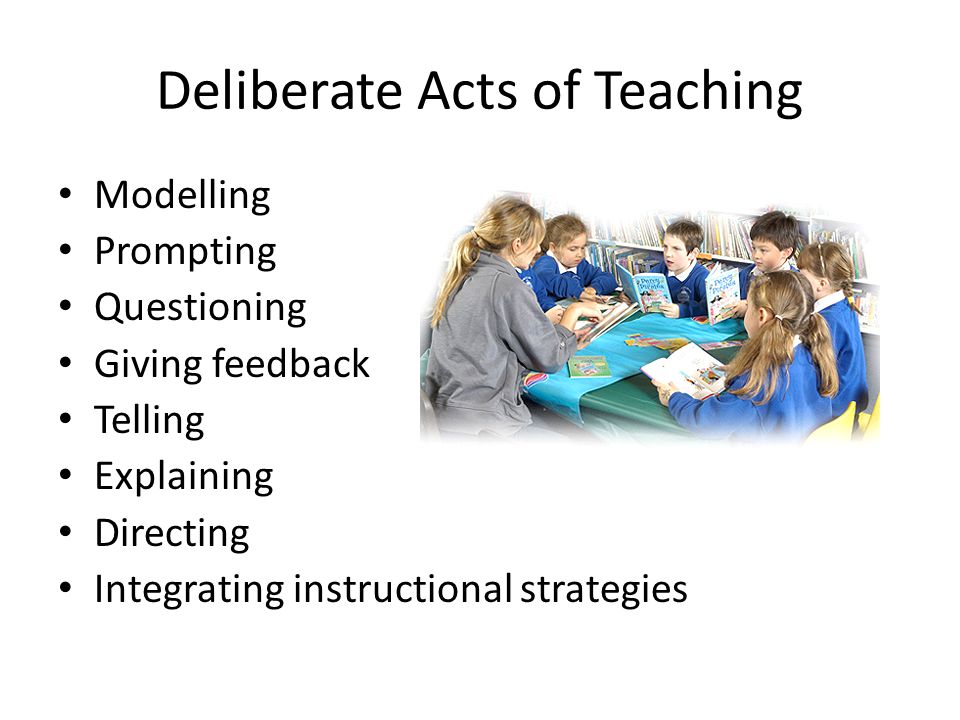
Instructional strategies are the tools of effective practice. They are the deliberate acts of teaching that focus learning in order to meet a particular purpose. Instructional strategies are effective only when they impact positively on students’ learning.
Effective Literacy Practice in Years 5 to 8, p. 78
Teachers need to be able to use a range of deliberate acts of teaching in flexible and integrated ways within literacy-learning activities to meet the diverse literacy learning needs of our students.

Deliberate Acts of Teaching


Apparently ERO feels we weren't able to show that we were teaching our children, and were too reliant on a use of technology to do so.
Therefore somehow we need to get better at showing what it is that we actually do!


I checked to see what were classified as 'Deliberate Acts of Teaching.'
Sometimes you just need to use the right jargon. This is something I have tried to avoid throughout my career as I have seen a number of people use jargon as a weapon to show that they know more than others. My pet peeve is 'pedagogy!' I would much rather say things in a way that everybody can understand- isn't that why we are supposed to write plain English, easy to understand reports?

Pedagogy: - 

What is Pedagogy?

Pedagogy is defined simply as the method, and practice, of teaching. It encompasses: 
When people talk about the pedagogy of teaching, they will be referring to the way teachers deliver the content of the curriculum to a class.


My challenge is not using the Deliberate Acts of Teaching (I hope!) so much as it is in recording them.

To help I think I will print out the list of deliberate acts of teaching and store them at the front of my planner.
I also need to add those specific words to some generic, as well as specific plans eg handwriting and phonics will include modelling and feedback
Maybe the words can be highlighted or colour coded and specific questions I am planning to use, or do actually use can be recorded in a regular fashion, whether daily, weekly, per lesson type...

Next steps:
. Print deliberate acts of teaching and put in planner
. Record at least one deliberate act of teaching in planner each week, increasing frequency as it becomes a habit
. Aim to complete the daily class journal daily!
I also found a great lesson plan about simple sentences which outlines DATS through out


  • Use of inquiry to inform planning and teaching.
  • Checking to see if planning and delivery of programme is tailored to the strengths, needs and interests of 膩konga.
  • Using appropriate pedagogies to accelerate progress of 膩konga who are achieving below national expectations

TBCS - Learning Through Play: My Why - Judy-Anne

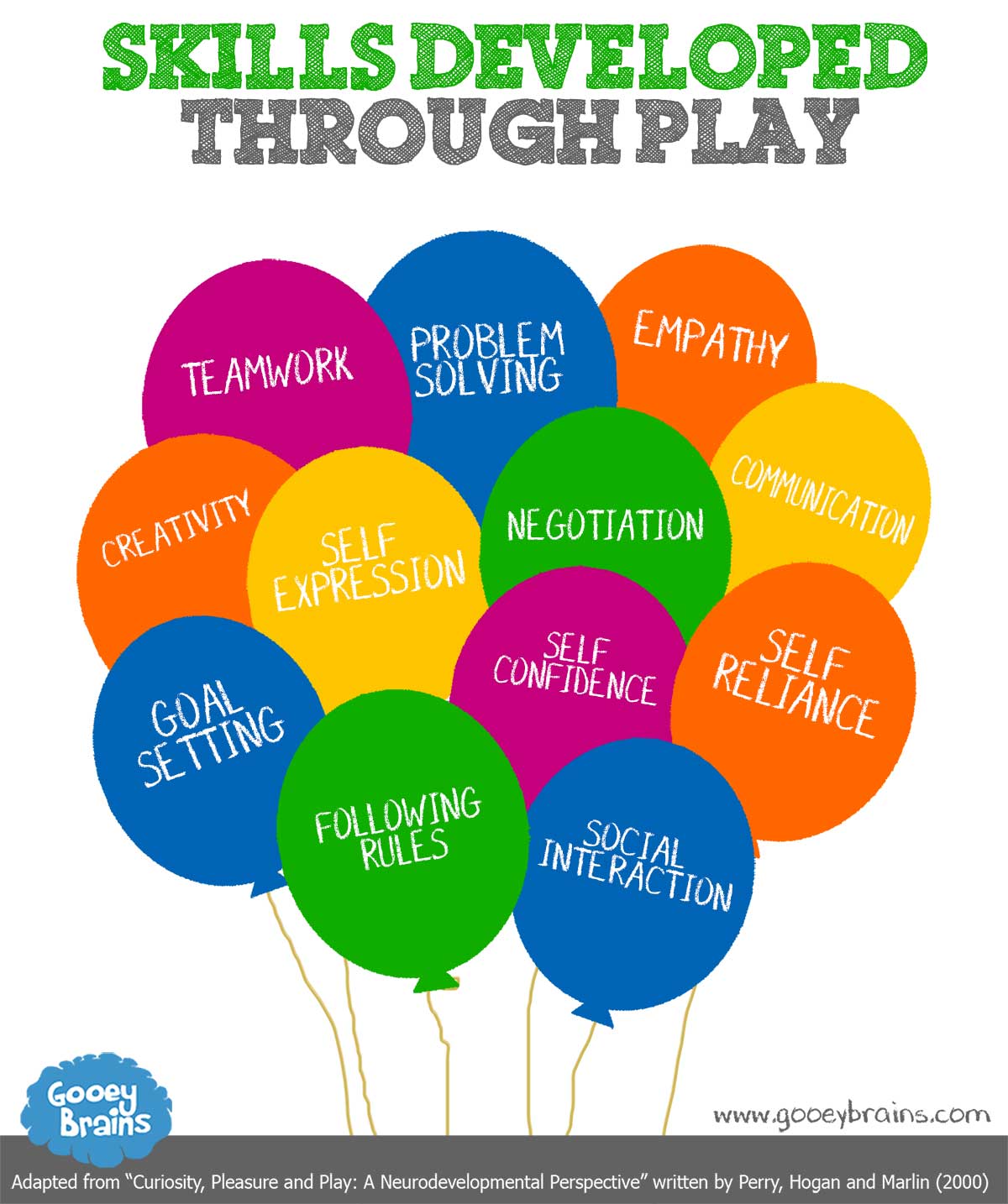
Skills developed through play, learning through play


I have been meaning to get to developing my why for ages now. So many ideas floating it has been hard to put them together. I guess I wanted to be able to come up with a 'one sentence wonder' and maybe it will take more than that.
I want to be able to put together ideas from a number of people and meld them into my own foundation.

Nathan Mikaere Wallis - Brain wave Trust
How a child sees themselves is crucial
Oral language for under 7's is vital
Boys particularly benefit from play-based learning
Creativity is linked to resilience and intelligence
Most learning is done through play


Leslee Allen- Number Agents
“It is paradoxical that many educators and parents still differentiate between a time for learning and a time for play without seeing the vital connection between them.” -Leo F. Buscaglia

We are so busy preparing children to be successful adults that we forget to embrace the brilliance of a child. Their honesty, often to the point of bluntness; their openness to new learning; their inquisitiveness; their quirky senses of humour and the way they can belly laugh at just about anything. Their ability to freely use their imaginations without the constraints of reality; their intelligence to be able to turn the tiniest, most obscure thing into a wonderful world of play; their inventiveness and their ability to truly be absorbed in the moment. Their innate ability to embrace difference; and their dispositions of wonder and joy. Not to mention their overwhelming ability to forgive. Children gradually learn to modify these behaviours to become what they think we need them to be, but maybe it is us that should be modifying ourselves. The world needs the qualities of a child, now more than ever. Bringing play back to classrooms could be just the answer we are looking for.

Leslee Allen Perhaps instead of a definition it would be useful to think of the components of what play looks like an environment that values child led play. Joy, wondering, child led discussion, children’s interests genuinely guiding learning, teacher as follower/provoker rather than director, developmental awareness, timetable free, narrative assessment valued, inside/outside, high trust, mutual agreement between learners and teacher. Not sure if I’m really making any point here lol, but perhaps you get what I mean? Just typing on my phone off the top of my head.

Longworth Education
Conversation is critical
Peer to peer conversations correlate to children's achievement
Developmentally appropriate response to the learning needs of students
Age and stage don't necessarily link!
Vygotsky and Piaget
Emotional intelligence is built
When engaged in authentic play, children are more likely to develop higher order cognitive and socio-emotional skills, particularly through problem solving

Tara O'Neill - Learning Through Play facebook page
 The learning comes through the authentic play. ‘Learning through play’.
Some schools get freaked out simply by the word ‘play’. It’s just simply developmentally appropriate inquiry 馃し‍♀️ not scary. I’m with you on validating the word.
Tash Dunne


Paula Jamieson - Play, Make, Create

Five proven benefits of play:
Healthy brain development
Reduces obesity and associated diseases, particularly if children are running, jumping and climbing
Helps children manage stress
Helps families bond
Contributes to academic skills, in particular language development and general knowledge
From https://www.kqed.org/mindshift/52136/five-proven-benefits-of-play


In Room 1 we are Learning Through Play to help encourage critical, creative, innovative thinkers who are engaging in their learning in a developmentally appropriate way. There should be lots of talking, movement and creativity.

producing critianinnovative thinkers.

produtical, creative anthin

I am most keen on the idea of free play and have become more comfortable letting the children play outside, within the boundaries / rules we have set.
I am interested to see what ideas I get out of this Fridays workshop and whether that might change my thinking.

Currently we are in camp week so there is plenty of playing occurring.
Next week we will be back to a more normal programme. This involves lots of free play, individual reading time, class writing with varied goals, class and group maths.
I have some new plans for writing / phonics with some of the less advanced children.


Next steps:

  • Play, Make Create workshop on Friday
  • E modules through Longworth Education


9 November 2019

TBCS - Decodable Texts - Judy-Anne


Inquiry:

So I had been seeing posts on Facebook pages about decodable texts and how amazing they are but didn't know what they were or why they were so great, and I also wasn't sure how to get new resources with an empty money pot!

I did a little research on them today and discovered they are phonics based. There are heaps of free ones available, some online and some that you can print but looking at them I realise we have some of them sitting in the back room as well. What a bonus!

I am wondering whether increasing use of phonics and decodable texts will help my youngest boys with their reading at a more accelerated pace.

Action Plan:

. Set up the phonics song on the sample student on seesaw so they can access it for themselves more readily
. use decodable texts with Samuel, Beauden, William and Elijah
.continue to work on blends with the whole class


Chalking on Blogger

Decodable books


  • Undertaking PLD and further professional reading.
  • Engaging with school-wide inquiry approaches as expected.


  • Use of inquiry to inform planning and teaching.
  • Checking to see if planning and delivery of programme is tailored to the strengths, needs and interests of 膩konga.
  • Using appropriate pedagogies to accelerate progress of 膩konga who are achieving below national expectations.

9 September 2019

TBCS - Fitting it All in - Judy-Anne


Fitting everything is one of the biggest areas of concern for teachers. You know what? You can not be everything to everyone all of the time. If you burn out, then the greatest resource in the classroom is extinguished. Here are some basic tips for fitting things in that I shared at my last workshop.
Aim to only read twice a week with children. Quality over quantity.
Change the time of day you do things each day, this means different slots will be used for play etc. We eat together and often do phonics at this time of day.
Set a goal of writing for five or ten minutes independently for all children depending on age, then let them go, while others can choose to stay. The ones that go, are usually the ones that need the play.
Start the day with play...that first 20 minutes of the day is generally when I get most of my photos for reflection and is also a good chance to fit one or two readers in.
Set weekly priorities, what are your goals for the week and then tick them off as done. This feels good!
Don't have a timetable, write it down, after you have done it, then you won't feel guilty at the end of the day when you have not managed to get to everything.

I'm pretty sure this came from Leslee Allen of Number Agents. 


Reflections:
I love this lady! She is so sensible and realistic.
Sometimes it is easier to just continue with the same thing rather than taking the time to think about the changes you want to make. I am slowly trying to change things in my class and want to use many of Leslee's ideas.
It is important to remember that if I burn out I am not any use to my class!

Next Steps:
I was wondering how to get the photos for the daily journal so using the first part of the day for that is very sensible.
Try changing the time of day we do things- good idea.
I am trying to remember to have food a few minutes before they go outside to play too so that they eat enough during the day.
Weekly priorities- brilliant.


Undertaking PLD and further professional reading.

3 September 2019

TBCS - Sally Clendon Course - Judy-Anne


Well I obviously need to come back to this one! Took lots of notes on the handouts!


  • Undertaking PLD and further professional reading.

28 August 2019

TBCS - Teaching Beginning Readers - Judy-Anne


Finding the pathway of success


Main takeaways:
Struggling readers overly rely on meaning and sentence structure as compensation for poorer decoding skill.

Teachers need to be equipped with the knowledge and teaching methods that consider what happens in the brain as children learn to read.

..when teachers have the knowledge and resources for twaching the code explicitly and systematically, children's reading outcomes improve.

Next steps:

Upskill phonics knowledge


  • Undertaking PLD and further professional reading.

TBCS - Relational Leadership - Judy - Anne


Professor David Giles
Relational Leadership
The essence of leadership is relationship

Our mandate is to grow children not measure them

Life centric - what is giving life to this place?

To ponder
When is education, pedagogy,  curriculum, leadership not relational

If you get the culture right the learning follows

We are after leadership formation not leadership development

Leadership is not a solitary thing
What are the questions to ask yourself in relation to your contribution over the next 3-5 years
What do we want the school to be known for?
Leadership journey is mostly about finding out who we

How do we walk alongside and change the narrative

Major takeaways:
Leadership is not solitary
Our mandate is to grow children, not measure them
Education is always relational
What is life giving about our place?
What do we want to be known for?
What do I want my contribution to be over the next 3-5 years?

Next steps:
Check out appreciative inquiry
Consider what I want my contribution to be over the next 3-5 years


Undertaking PLD and further professional reading


TBCS - Teacher Imposter Syndrome- Judy-Anne

imposter-syndrome

Reflections:
I had no idea there was actually a name for it but I know that I have spent the greater part of my teaching career waiting for somebody to walk into my class and tell me I have no idea what I am doing and no business being in the classroom. A few years ago I said something to that effect to one of our senior teachers and they said they felt the same! 
It certainly meant I had to read this article!

I am not a perfectionist by any stretch of the imagination nevertheless one of the statements that really resonanated with me was that ' Aiming to be a perfect teacher was an unattainable and pointless goal.'
One of the challenges with teaching is that there is always more we could do, or things we could do better. Sometimes we have to remember to celebrate what is going well- celebrate the small wins. Wouldn't we do that for our children?!
The other statement that I realised was me to a T was 'people with imposter syndrome explain away any success as luck, chance, or a result of something outside of their actions. I did that frequently and still catch myself doing it now. This just needs to stop.'

Celebrate the wins- no matter how small.

I had a chat with Margaret about this too because I realised that this artickle could possibly have been describing her as a beginning teacher- ie appearing capable but inside really struggling. 

Next steps:
Celebrate the small wins
Be prepared to take credit for successes rather than assuming it was luck, chance or someone else who made the difference
Ensure I check in with Margaret regularly to ensure she is doing the same!


  • Undertaking PLD and further professional reading.

  • Appropriate and professional communication with colleagues, 膩konga and wh膩nau.


24 July 2019

TBCS - How to Lead - Judy-Anne


The Think Farm; People Mechanic

My notes:
John Peachey
People Mechanic
How to lead when you are not in charge
Www.thethinkfarm.org
Creating leaders who can change their world
John@thethinkfarm.org
When leaders rise, everybody rises

The dance of leadership
Leadership requires, strength, grace, poise, rhythm
Also excitement and difference
People tend to leave jobs because they don始t feel trusted, valued or that their
contributions are appreciated
Often it is just because we forgot to say thank you - we want the
acknowledgment
God endorsed his son publicly when He got baptised!
I want to be with someone who believes in me
Staff want to be listened to - very significant findings in research
It始s about slowing down and listening to the heart people have
To learn leadership read Psalm 23
Stop, Listen, Start
Coffee Fixes Everything - because you have to slow down and listen
Tools and strategies
John will send the document!
Victor Frankl
Your life has value in someone else始s life, not only are you unique,  you are
irreplaceable
The French don始t say I miss Megan, but Megan is missing from me

Better outcomes require:
Better communication, relationships, data, decisions

Servant leadership
Hunger for wisdom
Expect the best
Accept responsibility
Respond with courage
Think ‘others first始

Big difference between having the skill of leadership and the heart of a leader
What would happen if you were looking to try to add value to every person you
meet?
Encourage, edify, comfort
Listen to podcast - servant leadership - m... company
As leaders, like Gideon,
Ignore the past
Disregard the present
Speak to the future
Speak to people始s value, rather than their behaviour or performance- people
know when they aren始t performing or behaving well.

What is in your hands?


Reflections:
When leaders rise everybody rises
Staff want to be listened to - very significant findings in research
It始s about slowing down and listening to the heart people have
Better outcomes require:
Better communication, relationships, data, decisions

Servant leadership
Hunger for wisdom
Expect the best
Accept responsibility
Respond with courage
Think ‘others first始

As leaders, like Gideon,
Ignore the past
Disregard the present
Speak to the future

Encourage, edify, comfort
What is in your hands?

Slowing down is becoming a theme! PAUSE to think from Joy Hooker and Critical Thinking 

Next steps:
To learn leadership read Psalm 23
Research Victor Frankl
Listen to podcast on servant leadership  9m.... company)
Try to add value to every person you meet?
Speak to people始s value, rather than their behaviour or performance- people
know when they aren始t performing or behaving well.


Links to Teacher Standards:


  • Making time to have professional discussions with colleagues.
  • Attending and contributing to PLD opportunities within and beyond my school
  • Undertaking PLD and further professional reading.

13 July 2019

TBCS - Encounter with an Atheist - Judy-Anne


Sean got himself into character as an atheist and took questions from the floor. Too many big, technical words for me!


Reflections:
A major part of Sean's point was that we need to think about how we treat people who don't believe the same as us. We don't need to get defensive and make it into a fight and an opportunity for one up man ship or a belittling of others ideas.
His point fits nicely with his dads message about relationships that transform.
You need to have a positive relationship with people to really speak into their lives.

Next steps:


Links to Teacher Standards:


  • Making time to have professional discussions with colleagues.
  • Attending and contributing to PLD opportunities within and beyond my school
  • Undertaking PLD and further professional reading.

TBCS - Touching the Evidence - Judy-Anne


Josh's powerpoint:

My notes:


Reflections:
It was great to go to Bibleworld in Rotorua a couple of days later. They had done an amazing job of showing a timeline of the Bible and showing how some of the places would have looked way back in history. It's interesting to see how many connections / coincidences occur with God involved. Not only were there also scrolls at Bible world but also a quote came up in my facebook feed that fitted with another session.

Next steps:

I plan to pring out the posters of the timelines. They were very useful and interesting.
I think I will follow Bible world on facebook too.


Links to Teacher Standards:


  • Making time to have professional discussions with colleagues.
  • Attending and contributing to PLD opportunities within and beyond my school
  • Undertaking PLD and further professional reading.

TBCS - Learning Through Play at Rolleston Christian School - Judy-Anne


Kendra's notes:

What I learn when I play

My notes:

Learning Through Play
They called it this deliberately (rather than Play based learning) to expalin to parents that it was about the learning, with play being the vehicle for the learning
Question to ask children: What are you learning at the moment?
Loose parts playground – great idea
Research building blocks - Barbara Brahn, action stations
Have a solid why!
Nathan Wallis:
Eg oral language vital for under 7s
How a child sees themselves is critical- do they see themselves  as a learner
Boys particularly benefit from play based learning
Creativity is linked to resilience and intelligence
Most learning is done through play
Longworth education:
Peer to peer conversations correlate to children始sachievement 
Developmentally appropriate
Age and stage don始t necessarily link! 
Emotional intelligence is built
The why from a Christian context:
Time with our students
Biblical worldview- more opportunities to role model and facilitate Christian character
Enjoy the season of childhood
Through our faith we help bring light to the world

When does this happen in the day?
At Rolleston it始s from 8:30 - 12:15
Guided reading and maths groups during this time
Where:
Outdoor spaces
A space where teachers can see, but also teacher aide available
Making sure there are boundaries, for safety
Indoor spaces - multiple spaces
Suggestion list on tki for early childhood services
We built something using some provided LEGO
What were you learning when you were building something out of LEGO?
Resilience- it kept falling apart
Construction
Spatial awareness
Will it fit
Will it stay together
Emotional regulation
Acceptance
Disappointment
Problem solving
Colours and patterns
Fine motor skills
 May have been talking with others
The what:
Sustained play
Seesaw assessment- reporting on what the children are doing with play only, eg a photo or video of the play and what it shows eg using LEGO showing fine motor skills, patterns, planning, sorting.... Relationships
Coaching
How: Teacher Practices
Team meetings- look at patterns, how to extend, what is put out is quite intentional
Questioning not what did you make but tell me about this
Provocations eg 4 pieces of coloured paper,container of mixed animals 
Guided groups
Room sectioned off for teacher time- no play occurs there
Rolling kai - from 9am til 12:15, must have 2 things  left for lunch
Challenges:
Resourcing
People not seeing the value
Noise level
Children始s idea of play
Time for teachers to learn
Timetabling
NPDL - new pedagogies for deeper learning
Follow ups for reading occur for children from purple up, sent home
Have a whiteboard table and pens available
Earmuffs for children who need it quieter
Ensure you know interests of children, especially providing stuff for the interests of autistic children

Reflection:
Play is the vehicle for learning

Next Steps:
. I need to finally outline my 'Why'
. Remember to ask children- what are you learning at the moment
.Develop a loose parts playground- where?
. Research Barbara Brahn - Building Blocks
. Research Action Stations
.Check list on TKI for suggestions of desired spaces available
. When sending home seesaw posts remember to say what they were learning at the time, add some context. Like a learning story.

Links to Teaching Standards:


  • Making time to have professional discussions with colleagues.
  • Attending and contributing to PLD opportunities within and beyond my school
  • Undertaking PLD and further professional reading.


TBCS - Building Relationships that Transform - Judy-Anne


Building Relationships that Transform

The 7 A's
Affirmation
Acceptance
Appreciation
Availability
Affection
Approach
Accountability

A day or two later something came up in my feed that corresponded beautifully to the concept of Affirmation.

It occurred to Pooh and Piglet that they hadn't heard from Eeyore for several days, so they put on their hats and coats and trotted across the Hundred Acre Wood to Eeyore's stick house. Inside the house was Eeyore.
"Hello Eeyore," said Pooh.
"Hello Pooh. Hello Piglet," said Eeyore, in a Glum Sounding Voice.
"We just thought we'd check in on you," said Piglet, "because we hadn't heard from you, and so we wanted to know if you were okay."
Eeyore was silent for a moment. "Am I okay?" he asked, eventually. "Well, I don't know, to be honest. Are any of us really okay? That's what I ask myself. All I can tell you, Pooh and Piglet, is that right now I feel really rather Sad, and Alone, and Not Much Fun To Be Around At All. Which is why I haven't bothered you. Because you wouldn't want to waste your time hanging out with someone who is Sad, and Alone, and Not Much Fun To Be Around At All, would you now."
Pooh looked and Piglet, and Piglet looked at Pooh, and they both sat down, one on either side of Eeyore in his stick house.
Eeyore looked at them in surprise. "What are you doing?"
"We're sitting here with you," said Pooh, "because we are your friends. And true friends don't care if someone is feeling Sad, or Alone, or Not Much Fun To Be Around At All. True friends are there for you anyway. And so here we are."
"Oh," said Eeyore. "Oh." And the three of them sat there in silence, and while Pooh and Piglet said nothing at all; somehow, almost imperceptibly, Eeyore started to feel a very tiny little bit better.
Because Pooh and Piglet were There. No more; no less.
Romans 12:15 - "Rejoice with them that do rejoice, and weep with them that weep."


Reflections:
It's amazing how some messages keep getting repeated. In this case it was affirmation, I have often had 'rest' and lately it has also been 'take it slower' and 'relationship.'

Next steps:

Slow down and remember these things!
Important for family and friends and not just work mates too.

Links to Teacher Standards:


  • Making time to have professional discussions with colleagues.
  • Attending and contributing to PLD opportunities within and beyond my school
  • Undertaking PLD and further professional reading.

TBCS - Critical Thinking - Judy-Anne


Thinking like a leader 


My notes:

Thinking Like a Leader
Joy Hooker
Brains shortcut is to seek out things to confirm what you already suspect- you need to be open minded as it could very well be wrong
Easier to trust people you like
Our decisions are only as good as the knowledge we have at the time
If you are looking at things from up close they look bigger- so problems seem bigger when we are in them!
Our mind fills in gaps in missing information- with things that aren始t there!
Sometimes we need to look outside the box which we have put around the issue, by not thinking that we have seen this before so this is what will happen -look outside the pattern, get other peoples perspective as they have a different
box!

Steps to critical thinking:
1.     Identify
Identify the main points, the claims being made, the evidence used, the conclusions reached
Do I have enough info and the correct info
Hit the pause button - not jumping in with a solution or a reaction
Apollo 13 movie clip
Didn始t panic
Listed what was happening
Constant communication
Team work
Check the data
Pause, check, I始ll get back to you
Listen to one at a time- create order
May need to accept the impossible!
Dealt with immediate safety
Deal with what you can deal with, immediately
Clear in their identification

2.    Analyse
Look at the issues from different angles
What are underlying motives and root causes
Strengths and weaknesses
Fact versus fiction

3.    Evaluate
What conclusions can you draw?
Which solution fits the best?
Why is this the best solution?

Apollo 13 clip
Saw problem
Communicated immediately to a leader
Gave their analysis
Team charged with finding solution
Used what was going to be available on the shuttle
Built a model
Wrote step by step procedures
Passed their info on
Stayed with guy giving the instructions
Knew what could be used when a problem arose, because they knew what equipment was available
Delegated
Didn始t waste time on blame
Corrected miscommunication
Solving the immediate problem
Critical thinking allows you to make the issue less personal, it始s a factual, logical process
Tends to de escalate an issue
PAUSE to THINK
Bad leaders don始t make bad decisions, they make no decisions
The way to get out of a bad decision is to make a good decision
Don始t aim to make zero wrong decisions! Realise you will make wrong decisions!
Decision time is when you have around 60 percent of the knowledge you need
If you have between 40-70 percent of info go with your gut!

Takeaways for me:

Be open minded, look outside the pattern, get other people始s perspectives, PAUSE to think, you only need about 60% of the info to make a decision, If you have between 40-70 percent of info go with your gut! The best leaders make decisions- even though some of them will be wrong


Reflections:
.Be open minded
.Look outside the pattern
.Get other people始s perspectives
. PAUSE to think
. You only need about 60% of the info to make a decision, If you have between 40-70 percent of info go with your gut! 
.The best leaders make decisions- even though some of them will be wrong

Next steps:
Use the process! Especially Identifying the issue clearly

Links to Teacher Standards:


  • Making time to have professional discussions with colleagues.
  • Attending and contributing to PLD opportunities within and beyond my school
  • Undertaking PLD and further professional reading.