This blog is a reflection of our learning journey.
Aim to put a photo on every post.
Each post should include:
1. Your actual Post!
2. The Teaching Standard it pertains to
3. How you think this fits the Teaching Standard
4. Your Reflection. What are you learning? So what?
5. Your next steps. What do you want to learn next?
6. Label with your name, the standards it covers, Appraisal. Make sure all labels begin with a cap[ital letter.
30 October 2018
TBCS - Teacher Wellbeing - Judy-Anne
So once again we got to the end of the first day of term and all realised we were behind already.
I recall an ERO visit when I was at a previous school where the Deputy Principal commented as we took our paperwork over to their office space that this was the first time she had been up to date with her paperwork in 30 years!
Why do we do this to ourselves? How do we stop?
Some people seem to have developed a good system for themselves, working set hours and not taking work home except around report time. But others are posting on facebook, whether it be showing what they have been doing or asking for help with some curriculum area or behavioural issue, at all hours of the day and night, "non contact- holidays" or not.
I liked the idea discussed at a recent NZSTA training where one board is looking after the well being of their teachers as they realise that that ultimately affects the well being of their children.
I have tried many different ideas over the years so maybe it is time to write some down and post some results so I know what works best for me.
Ideas:
. Set hours for work - tricky when we are carpooling and I want to take chances to spend time with Danni when it is available. Maybe it just means putting a limit on hours worked in a week.
. Massage - love this one so need to try and find somebody I like and ensure money is put aside for this
. Craft
. Reading
. Gardening
. Coffee- not relaxing for me, but maybe make time for an alternative eg hot chocolate, iced coffee, at someplace nice
. Follow relaxation tips from the relaxation/ massage therapist we visited in Wellington.
. Accept that some things won't get done
. Make a 'done' list instead of a to do list
.Set realistic expectations, both for myself and others
. Delegate
. Do the less desirable tasks first
Teacher Inquiry:
How can I spark more energy and joy?
Start with registereing for Outdoor classroom day November 1 2018?
.
29 October 2018
27 October 2018
TBCS - Forgetful = Intelligent? - Judy-Anne
https://ideapod.com/forgetful-actually-sign-unusually-intelligence-according-scientific-research/
This makes me feel much better about forgetting!
24 October 2018
TBCS - Craig - PLD - 4 Deadly Errors of Teaching Writing
4 Deadly Errors of Teaching Writing
These notes are taken from the PLD conference I attended with Andrew Pudewa entitled Spicing up Your Kids' Learning.

1. Over Correcting
Correcting is not a good word to use because it indicates wrongness.
- It has a negative connotation.
- Writing is not as black and white as Maths.
- It is not objective or clear.
Rather, use the word editing - to help the writer be the best version of them on paper.
- Mark to make it legal and not good.
- Say implement these changes and finish.
- Use corrections as lesson plans for teaching
- Teach to the point of need.
- A acceptable
- I incomplete
2. Withholding Help
"I might help too much"
- Students will tell you when they don't need help.
- When you withhold help, you limit learning.
- You wouldn't teach swimming this way which is life or death, so why say it...
- Swimming is a skill and it is acceptable to coach.
- It is perfectly acceptable to dictate.
- If they could've they would've.
- Independence in a skill comes from spending time modelling, questioning, and practising.
- Help - Don't meddle.
3. Unclear Assignments
- It is a form of withholding help...
4. Over Expectations
- We often have a desire to compare children by age.
- Grade levels used to be by level achieved - it indicated a mastery level.
A book to read is "Understood Betsey" about a country one-room school "But what grade am I in?"
Music Teachers don't care:
- When you start
- How fast you progress
- what others are doing
- Get on the path
- Are you moving forward?
Any child is expected to do their best, whatever grade.
Are we making progress - That's all that God expects of His people.
8-10 years - Whatever they do is cute.
11-12 - Not good enough.
13 + - They will never get there.
- They need to do far better.
11-12 - Not good enough.
13 + - They will never get there.
- They need to do far better.
- we need to solve the problem.
- Stop writing things that don't make sense!
It's like telling a plant to grow... you can add water and sun, you can sing to it, but you have to wait.
Kids go through phases awkward - then it clicks.
Don't compare kids on age.
Don't over expect.
Where to Next...
I need to focus on encouraging each student to do their best and to work on developing and extending their skills without expecting too much of them.
I need to be prepared to help as much as is needed to give my students confidence to achieve what they need to.
I need to develop the achieved and incomplete marking attitude and celebrate with students who attempt to go beyond the limits of the lesson.
With students who are struggling, I will set them up beforehand to give them time to think through what is about to happen and help them orgainise their thoughts and know what they need to do to succeed.
With my students who are at level one, I will help spell words and write them on their page so they can use them with confidence, and model correct sentences and get them to copy them to train them.
Undertaking PLD and further professional reading.
Attending and contributing to PLD opportunities within and beyond my school.
Sharing PLD knowledge, relevant readings and research with colleagues.
Where to Next...
I need to focus on encouraging each student to do their best and to work on developing and extending their skills without expecting too much of them.
I need to be prepared to help as much as is needed to give my students confidence to achieve what they need to.
I need to develop the achieved and incomplete marking attitude and celebrate with students who attempt to go beyond the limits of the lesson.
With students who are struggling, I will set them up beforehand to give them time to think through what is about to happen and help them orgainise their thoughts and know what they need to do to succeed.
With my students who are at level one, I will help spell words and write them on their page so they can use them with confidence, and model correct sentences and get them to copy them to train them.
- Professional Learning
Margaret - Problem Solving in real life
| Measuring out distance throw for athletics |
| Digging and weeding out the long jump pit |
| Measuring out weed mat to place on the garden before covering it with bark.
Activities with real purpose
As a teacher I sometimes get a bit overwhelmed by what needs to be organised for lessons or activities and tend to forget that organising the students to do this gives them a real chance to take responsibility, apply learning, develop leadership and learn some valuable life lessons that are not necessarily academic. Steve had organised the playground to be re barked so as part of this he arranged for students to go out in small groups to do this along with having some of the more capable maths students work out how to place the weed mat down. This involved measuring the area and working this out as a group. Athletics provided another opportunity for students to set up stations for ball throw, sprints and relays which involved maths and team work again. It was interesting to watch them getting on with the task. Usually a leader came out, those with more gardening skills taught the others such as how to use a shovel effectively, weeding.
Next steps: Continue using these opportunities of "caretaking" around the school as they come up either as whole class, small groups, energisers for those needing a break from class work
|
17 October 2018
TBCS - Steve - ICT - Audit - Oct 2018
Karl came to carry out an audit as requested by me, after having spoken to Warren Hall about an audit. This came from attending a Beginning principal's Hui. The following is his feedback from our initial meeting.
Karl Summerfield (Connected Learning Advisory)
Oct 1, 11:59 NZDT
|
Steve - TBCS - Maori Consultation - Special Character
On Wednesday the 17th of October Sean Delany and John Mutu from the Marae, called in to discuss the proposed signage on the front of our building as on this page. They had dicussed our proposal and were very happy with it.
The black represented the darkness or night/evil, the red life or the blood of Jesus, and the white heaven. The three curves/circles were the Trinity and the cross the christian basis it all revolved around.
The patterning of kowhaiwhai on the background gave the Maori emphasis without it overriding.
The colours of the school were also suitable.
The suggested we look at having it as is if the background had the patterning or look at alternative options for bring the centre emblem to the front, as in raised.
I have sent this of the Andy at Image Creations to give us a price re the above, checking on the background patterning.
Labels:
1 - Te Tiriti o Waitangi,
Art,
Marae,
Special Character,
Steve
Steve - TBCS - St Johns First Aid - October 2018
Kathryn from St Johns came to run through Outdoor First Aid, especially for the Year 7 & 8's who are tramping the Abel Tasman in week 3.
All students participated pairing up to put on bandages, check DRSAB = Danger, Response, Send, Airway, Breathing.
The game played where they in groups had 5 minutes to right a list of things the would take on a tramp. They then were presented with scenarios of dangers they may find on a tramp. Hypothermia was the final diagnosis which all groups managed to work through the treatment and process.
Well worth undertaking for all Room 4.
A good presentation targeted to the outdoor environment and issues that may arise, from blisters to bee stings to hypothermia.
16 October 2018
Margaret Term 3 Asttle writing moderation

https://e-asttle.tki.org.nz/Teacher-resources/Marking-resources-for-e-asTTle-writing#Marking
Writing Moderation
Room 4 had their testing last term which included an asttle writing recount. As I hadn't marked these before Steve showed me the rubrics and the exemplars to follow. I marked a few before sitting down with Steve for moderating to check we were on the same page. It was very helpful to have this guidance and going over areas in more detail that I was unsure about and was able to continue the marking. The tests showed up so far areas that need working on for the rest of the year including expanding on ideas, especially becoming more complex/global, expanding vocabulary and adding interest with personal reflections, adjectives etc.
This could be achieved with some shared writing and rewriting/improving parts of their recount.
Camp Week Margaret
TBCS - Craig - PLD - Nurturing Competent Communicators Andrew Pudwa
Two Things You Can Do To Build Language Patterns And Nurture Competent Communicators
These notes are taken from the PLD conference I attended with Andrew Pudewa entitled Spicing up Your Kids' Learning.There is a false assumption that good readers make good writers...
Some get it (write and make sense) - some don't.
You can't get out (good English) what isn't in there in the first place.
Four reasons might be...
1. T.V. / Radio etc. are not a reliable, correct, or sophisticated language to input.
2. Peers are not a reliable, correct, or sophisticated language to input.
- Children change their vocabulary and complexity of language if with older children
- Children with the same age tend to dumb down and degress.
3. Busy parents and adults.
4. The way they read.
- Read lots - Read too fast and don't audibly hear complete sentences etc. - Skip unknown words
- Read little - do other stuff and not get language from books.
Solutions
1. Read to them.
- Don't skip anything.
- Read nuance
Read to them above their own decoding level.
The number 1 predicator of good writing in Adults is being read to by your parents.
The 2nd is audiobooks.
Reading to others does the same.
As an adult...
- Read what you want to read.
- Read whole books.
- 1850 - 1900 was the golden era of writing and language.
- Read to the whole family
2. Memorizing and Recitation
Memorization of anything is de facto good for the brain. It makes you smarter.
- Poetry
- Music and Drama
- Choreographed Dance
- Precise Memorization
In the olden days, "I have to go to school to say my lessons."
Memorising grows the brain and database of reliable, accurate, sophisticated language and syntax etc.
Suzuki Method is one example.
When learning another language, you can often hit a wall. One way passed is memorising a book (e.g. Jack and the Bean Stalk)
At school and even pre-school, it is good to memorise poems every week and keep reciting all of them all the time.
Where to next
2019 will see me begin to teach recorder. It will include teaching the students to read and play music with confidence but also learning songs by memory.
I will continue to prioritise reading aloud to my students with nuance and at a level above their own decoding level.
Memorising Memory Verses will be a priority for 2019. I will also add memorising some poems to the programme.
- Professional Learning
- Learning-Focused Culture
11 October 2018
TBCS - Craig - PLD - Writing Conference
Our School Goal this year is on improving writing.
Earlier in the year, my wife was contacted about a educational conference that was being offered for home-schoolers and teachers by Andrew Pudewa, the author of Writing With Excallence. The conference was entitled Spicing Up Your Kids' Learning.
I applied for leave to attend the conference and my request was granted and my course and travel costs were also covered by the school.
The Conference was held at the Bishopdale Reformed Church in Christchurch, August 10-11 2018
The following topics were covered:
- Nurturing Competent Communicators - The Power of Linguistic Patterns
- The Four Deadly Errors of Teaching Writing
- Fairy Tales and the Moral Imagination
- Paper and Pen: What the Research Says
- Mastery Learning
- The Four Language Arts
- Seven Keys Of Great Teaching
- Teaching Boys & Other Children Who Would Rather Make Forts All Day
- Lessons Learned From Three Decades Of Teaching
- + Question times
The conference helped very much and enthused me lots and gave me a lot of things to think about in regards to the way I teach and the way I could be teaching Writing.
In blogs to follow, I will share What I learned...
My wife and I also bought a couple of resources that I hope to use.
Bible Heroes Writing Lessons With Structure and Style
Teaching Writing, Structure, and Style - Seminar with practical workbook and 12 DVD's
10 October 2018
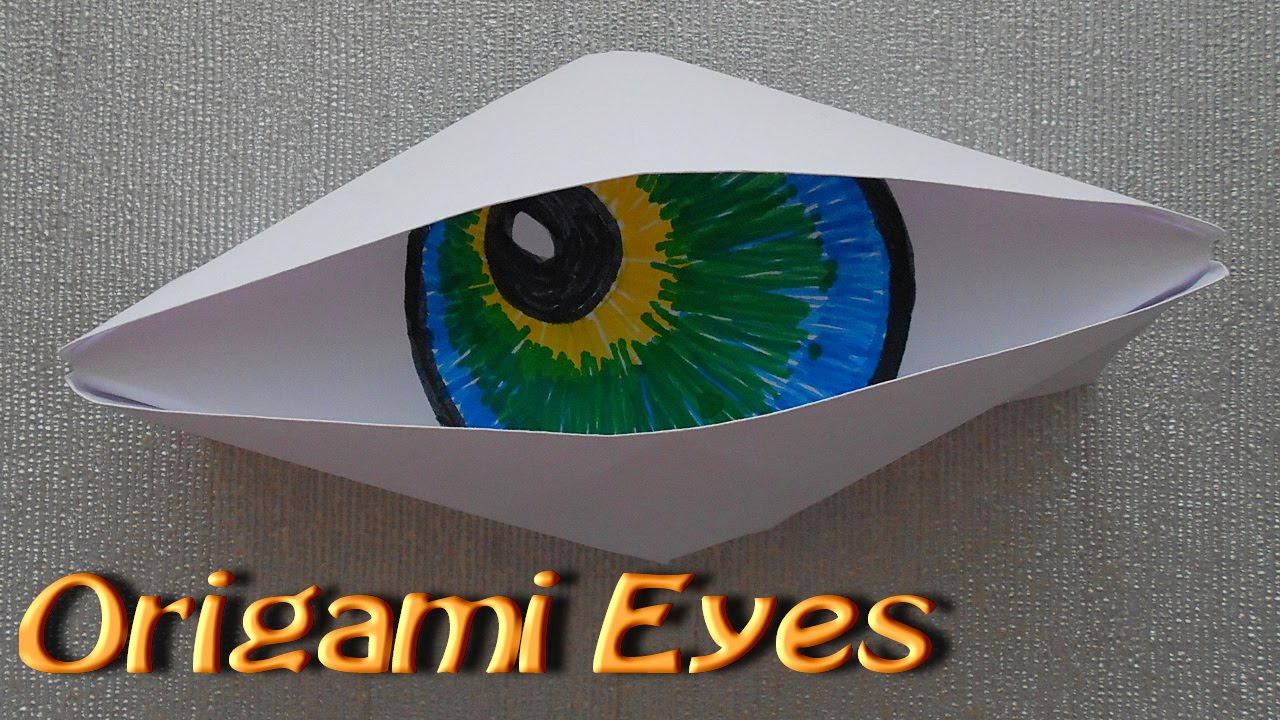
TBCS - Dragon Eye Art - Judy-Anne
dragon eye art
https://goo.gl/images/85WyJF
https://www.google.co.nz/search?rlz=1C9BKJA_enNZ781NZ781&hl=en-GB&biw=1024&bih=653&ei=iU9lW9nDHMzX-Qa_5IKYBQ&q=pastel+dragon+eye&oq=pastel+dragon+eye&gs_l=mobile-gws-wiz-serp.3..33i22i29i30j33i160l2.3273.17009..18652...1.0..0.334.8923.2-37j1....2..0....1.......8..0j41j0i71j0i67j0i131j0i143j0i22i30j0i8i13i30j33i21.0BIln4_c7x0#imgdii=TEnV9lu6sF5zWM:&imgrc=rNUFpZBs-czB0M:
https://www.google.co.nz/search?rlz=1C9BKJA_enNZ781NZ781&hl=en-GB&biw=1024&bih=653&ei=iU9lW9nDHMzX-Qa_5IKYBQ&q=pastel+dragon+eye&oq=pastel+dragon+eye&gs_l=mobile-gws-wiz-serp.3..33i22i29i30j33i160l2.3273.17009..18652...1.0..0.334.8923.2-37j1....2..0....1.......8..0j41j0i71j0i67j0i131j0i143j0i22i30j0i8i13i30j33i21.0BIln4_c7x0#imgdii=KHNygtmEgrkAzM:&imgrc=rNUFpZBs-czB0M:
Best dragon eye images
https://www.google.co.nz/search?rlz=1C9BKJA_enNZ781NZ781&hl=en-GB&biw=1024&bih=653&ei=iU9lW9nDHMzX-Qa_5IKYBQ&q=pastel+dragon+eye&oq=pastel+dragon+eye&gs_l=mobile-gws-wiz-serp.3..33i22i29i30j33i160l2.3273.17009..18652...1.0..0.334.8923.2-37j1....2..0....1.......8..0j41j0i71j0i67j0i131j0i143j0i22i30j0i8i13i30j33i21.0BIln4_c7x0#imgdii=AHh2tnHdW91dzM:&imgrc=rNUFpZBs-czB0M:
https://goo.gl/images/85WyJF
https://www.google.co.nz/search?rlz=1C9BKJA_enNZ781NZ781&hl=en-GB&biw=1024&bih=653&ei=iU9lW9nDHMzX-Qa_5IKYBQ&q=pastel+dragon+eye&oq=pastel+dragon+eye&gs_l=mobile-gws-wiz-serp.3..33i22i29i30j33i160l2.3273.17009..18652...1.0..0.334.8923.2-37j1....2..0....1.......8..0j41j0i71j0i67j0i131j0i143j0i22i30j0i8i13i30j33i21.0BIln4_c7x0#imgdii=TEnV9lu6sF5zWM:&imgrc=rNUFpZBs-czB0M:
https://www.google.co.nz/search?rlz=1C9BKJA_enNZ781NZ781&hl=en-GB&biw=1024&bih=653&ei=iU9lW9nDHMzX-Qa_5IKYBQ&q=pastel+dragon+eye&oq=pastel+dragon+eye&gs_l=mobile-gws-wiz-serp.3..33i22i29i30j33i160l2.3273.17009..18652...1.0..0.334.8923.2-37j1....2..0....1.......8..0j41j0i71j0i67j0i131j0i143j0i22i30j0i8i13i30j33i21.0BIln4_c7x0#imgdii=KHNygtmEgrkAzM:&imgrc=rNUFpZBs-czB0M:
Best dragon eye images
https://www.google.co.nz/search?rlz=1C9BKJA_enNZ781NZ781&hl=en-GB&biw=1024&bih=653&ei=iU9lW9nDHMzX-Qa_5IKYBQ&q=pastel+dragon+eye&oq=pastel+dragon+eye&gs_l=mobile-gws-wiz-serp.3..33i22i29i30j33i160l2.3273.17009..18652...1.0..0.334.8923.2-37j1....2..0....1.......8..0j41j0i71j0i67j0i131j0i143j0i22i30j0i8i13i30j33i21.0BIln4_c7x0#imgdii=AHh2tnHdW91dzM:&imgrc=rNUFpZBs-czB0M:
Subscribe to:
Posts (Atom)


Was great to meet you on Friday and see all the interesting e-learning that is happening at your school. Here is a quick summary of our meeting, and I'll be back in touch with you once I have spoken with our team.
We met on Friday 28th Sept 2018. You saw Warren present at a beginning principals' hui and took up the offer of a CLA audit.
Tasman Bay Christian School is a state integrated, full primary school with a roll of 46.
You have a 1:1 ratio of digital devices to students. Your senior students are all allocated a laptop for use during the school day. Junior students are using iPads.
You have a teaching programme with a strong emphasis on individualised learning. Your school programme utilises a series of online learning sites for reading (Reading Plus, Lexia), maths (Maths Buddy, Sum Dog) and typing. All students are working at their own level. Data, particularly from online learning programmes, is used to drive learning decisions for each individual student.
You have a fibre connection via N4L, and you have a fast wireless network that is meeting your needs well. Every room has a TV or projector and students regularly use these to share their screens with the class for presenting and collaboration. The learning spaces are flexible and can be reconfigured for quiet individual work or collaborative work.
Google, Reading Plus, Lexia, and Maths Buddy can all be accessed from home. Most students have access to digital technology at home, but not all.
In terms of engaging with whānau and the wider community, the school are using Seesaw for digital portfolios. Students are good at uploading evidence into the portfolios. Some parents interact with Seesaw, but you would like to increase that.
You have been allocated 150 hours CF-PLD, and have used 80 this year. You have been working with Rob Clarke (Learning Architects) with a focus on digital fluency & digital literacy. Staff are using Google docs to collaborate, particularly managing the team teaching environment. You are using Google Team Drive to manage your school data, and it is well organised.
I showed you the e-Learning Planning Framework, and suggested that you could use it as a possible next step. You and your staff could identify which phase (pre-emerging, emerging, engaging, extending, empowering) you best fit on each of the five dimensions. This would give you an idea of what you're doing well, and where any gaps might be.
Have I missed anything?
I'll get back to you soon.
Ngā mihi