Showing posts with label Play based learning. Show all posts

16 November 2019

TBCS - Learning Through Play: My Why - Judy-Anne

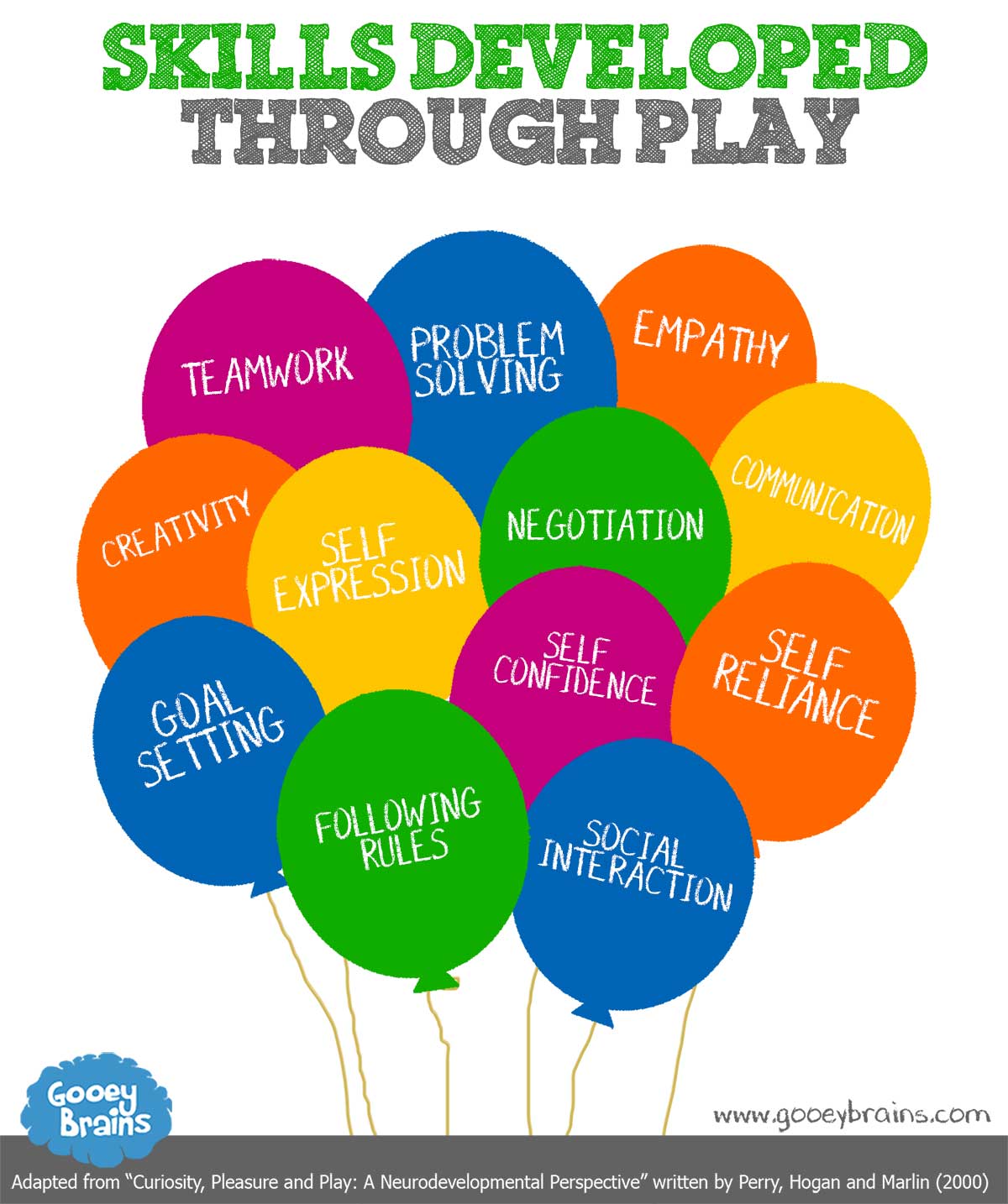
Skills developed through play, learning through play


I have been meaning to get to developing my why for ages now. So many ideas floating it has been hard to put them together. I guess I wanted to be able to come up with a 'one sentence wonder' and maybe it will take more than that.
I want to be able to put together ideas from a number of people and meld them into my own foundation.

Nathan Mikaere Wallis - Brain wave Trust
How a child sees themselves is crucial
Oral language for under 7's is vital
Boys particularly benefit from play-based learning
Creativity is linked to resilience and intelligence
Most learning is done through play


Leslee Allen- Number Agents
“It is paradoxical that many educators and parents still differentiate between a time for learning and a time for play without seeing the vital connection between them.” -Leo F. Buscaglia

We are so busy preparing children to be successful adults that we forget to embrace the brilliance of a child. Their honesty, often to the point of bluntness; their openness to new learning; their inquisitiveness; their quirky senses of humour and the way they can belly laugh at just about anything. Their ability to freely use their imaginations without the constraints of reality; their intelligence to be able to turn the tiniest, most obscure thing into a wonderful world of play; their inventiveness and their ability to truly be absorbed in the moment. Their innate ability to embrace difference; and their dispositions of wonder and joy. Not to mention their overwhelming ability to forgive. Children gradually learn to modify these behaviours to become what they think we need them to be, but maybe it is us that should be modifying ourselves. The world needs the qualities of a child, now more than ever. Bringing play back to classrooms could be just the answer we are looking for.

Leslee Allen Perhaps instead of a definition it would be useful to think of the components of what play looks like an environment that values child led play. Joy, wondering, child led discussion, children’s interests genuinely guiding learning, teacher as follower/provoker rather than director, developmental awareness, timetable free, narrative assessment valued, inside/outside, high trust, mutual agreement between learners and teacher. Not sure if I’m really making any point here lol, but perhaps you get what I mean? Just typing on my phone off the top of my head.

Longworth Education
Conversation is critical
Peer to peer conversations correlate to children's achievement
Developmentally appropriate response to the learning needs of students
Age and stage don't necessarily link!
Vygotsky and Piaget
Emotional intelligence is built
When engaged in authentic play, children are more likely to develop higher order cognitive and socio-emotional skills, particularly through problem solving

Tara O'Neill - Learning Through Play facebook page
 The learning comes through the authentic play. ‘Learning through play’.
Some schools get freaked out simply by the word ‘play’. It’s just simply developmentally appropriate inquiry 🤷‍♀️ not scary. I’m with you on validating the word.
Tash Dunne


Paula Jamieson - Play, Make, Create

Five proven benefits of play:
Healthy brain development
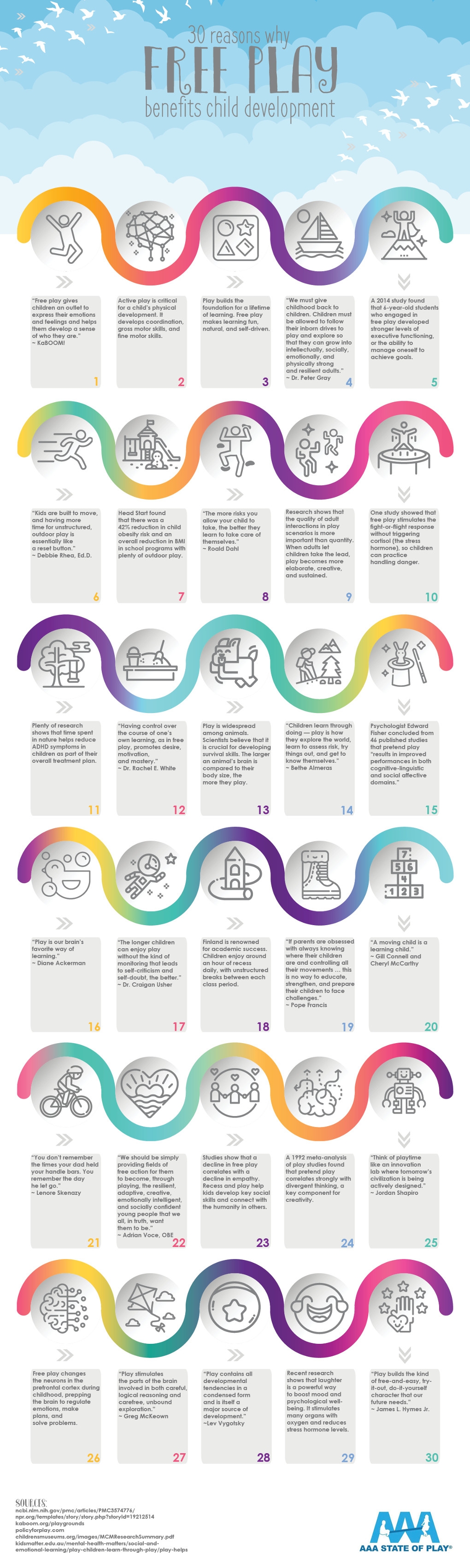
Reduces obesity and associated diseases, particularly if children are running, jumping and climbing
Helps children manage stress
Helps families bond
Contributes to academic skills, in particular language development and general knowledge
From https://www.kqed.org/mindshift/52136/five-proven-benefits-of-play


In Room 1 we are Learning Through Play to help encourage critical, creative, innovative thinkers who are engaging in their learning in a developmentally appropriate way. There should be lots of talking, movement and creativity.

producing critianinnovative thinkers.

produtical, creative anthin

I am most keen on the idea of free play and have become more comfortable letting the children play outside, within the boundaries / rules we have set.
I am interested to see what ideas I get out of this Fridays workshop and whether that might change my thinking.

Currently we are in camp week so there is plenty of playing occurring.
Next week we will be back to a more normal programme. This involves lots of free play, individual reading time, class writing with varied goals, class and group maths.
I have some new plans for writing / phonics with some of the less advanced children.


Next steps:

  • Play, Make Create workshop on Friday
  • E modules through Longworth Education



9 September 2019

TBCS - Fitting it All in - Judy-Anne


Fitting everything is one of the biggest areas of concern for teachers. You know what? You can not be everything to everyone all of the time. If you burn out, then the greatest resource in the classroom is extinguished. Here are some basic tips for fitting things in that I shared at my last workshop.
Aim to only read twice a week with children. Quality over quantity.
Change the time of day you do things each day, this means different slots will be used for play etc. We eat together and often do phonics at this time of day.
Set a goal of writing for five or ten minutes independently for all children depending on age, then let them go, while others can choose to stay. The ones that go, are usually the ones that need the play.
Start the day with play...that first 20 minutes of the day is generally when I get most of my photos for reflection and is also a good chance to fit one or two readers in.
Set weekly priorities, what are your goals for the week and then tick them off as done. This feels good!
Don't have a timetable, write it down, after you have done it, then you won't feel guilty at the end of the day when you have not managed to get to everything.

I'm pretty sure this came from Leslee Allen of Number Agents. 


Reflections:
I love this lady! She is so sensible and realistic.
Sometimes it is easier to just continue with the same thing rather than taking the time to think about the changes you want to make. I am slowly trying to change things in my class and want to use many of Leslee's ideas.
It is important to remember that if I burn out I am not any use to my class!

Next Steps:
I was wondering how to get the photos for the daily journal so using the first part of the day for that is very sensible.
Try changing the time of day we do things- good idea.
I am trying to remember to have food a few minutes before they go outside to play too so that they eat enough during the day.
Weekly priorities- brilliant.


Undertaking PLD and further professional reading.

13 July 2019

TBCS - Learning Through Play at Rolleston Christian School - Judy-Anne


Kendra's notes:

What I learn when I play

My notes:

Learning Through Play
They called it this deliberately (rather than Play based learning) to expalin to parents that it was about the learning, with play being the vehicle for the learning
Question to ask children: What are you learning at the moment?
Loose parts playground – great idea
Research building blocks - Barbara Brahn, action stations
Have a solid why!
Nathan Wallis:
Eg oral language vital for under 7s
How a child sees themselves is critical- do they see themselves  as a learner
Boys particularly benefit from play based learning
Creativity is linked to resilience and intelligence
Most learning is done through play
Longworth education:
Peer to peer conversations correlate to childrenʼsachievement 
Developmentally appropriate
Age and stage donʼt necessarily link! 
Emotional intelligence is built
The why from a Christian context:
Time with our students
Biblical worldview- more opportunities to role model and facilitate Christian character
Enjoy the season of childhood
Through our faith we help bring light to the world

When does this happen in the day?
At Rolleston itʼs from 8:30 - 12:15
Guided reading and maths groups during this time
Where:
Outdoor spaces
A space where teachers can see, but also teacher aide available
Making sure there are boundaries, for safety
Indoor spaces - multiple spaces
Suggestion list on tki for early childhood services
We built something using some provided LEGO
What were you learning when you were building something out of LEGO?
Resilience- it kept falling apart
Construction
Spatial awareness
Will it fit
Will it stay together
Emotional regulation
Acceptance
Disappointment
Problem solving
Colours and patterns
Fine motor skills
 May have been talking with others
The what:
Sustained play
Seesaw assessment- reporting on what the children are doing with play only, eg a photo or video of the play and what it shows eg using LEGO showing fine motor skills, patterns, planning, sorting.... Relationships
Coaching
How: Teacher Practices
Team meetings- look at patterns, how to extend, what is put out is quite intentional
Questioning not what did you make but tell me about this
Provocations eg 4 pieces of coloured paper,container of mixed animals 
Guided groups
Room sectioned off for teacher time- no play occurs there
Rolling kai - from 9am til 12:15, must have 2 things  left for lunch
Challenges:
Resourcing
People not seeing the value
Noise level
Childrenʼs idea of play
Time for teachers to learn
Timetabling
NPDL - new pedagogies for deeper learning
Follow ups for reading occur for children from purple up, sent home
Have a whiteboard table and pens available
Earmuffs for children who need it quieter
Ensure you know interests of children, especially providing stuff for the interests of autistic children

Reflection:
Play is the vehicle for learning

Next Steps:
. I need to finally outline my 'Why'
. Remember to ask children- what are you learning at the moment
.Develop a loose parts playground- where?
. Research Barbara Brahn - Building Blocks
. Research Action Stations
.Check list on TKI for suggestions of desired spaces available
. When sending home seesaw posts remember to say what they were learning at the time, add some context. Like a learning story.

Links to Teaching Standards:


  • Making time to have professional discussions with colleagues.
  • Attending and contributing to PLD opportunities within and beyond my school
  • Undertaking PLD and further professional reading.


12 June 2019

TBCS _ Early Academic Training Produces long Term Harm - Judy-Anne


https://www.psychologytoday.com/intl/blog/freedom-learn/201505/early-academic-training-produces-long-term-harm

Studies have demonstrated an initial gain in academics with early direct instruction, however this tends to disappear by grade 4.
More concerning is the effect on emotional and social aspects though. With a long term study showing the 23 year olds who were in the direct instruction (rather than play based) group had more instances of friction with other people, were more likely to have shown evidence of emotional impairment, were less likely to be married and living with their spouse, and were far more likely to have committed a crime than were those in the other two groups.  In fact, by age 23, 39% of those in the Direct Instruction group had felony arrest records compared to an average of 13.5% in the other two groups; and 19% of the Direct Instruction group had been cited for assault with a dangerous weapon compared with 0% in the other two groups.[4]

He puts it much better than I do by stating that;
One possibility is that the initial school experience sets the stage for later behavior.  Those in classrooms where they learned to plan their own activities, to play with others, and to negotiate differences may have developed lifelong patterns of personal responsibility and pro-social behavior that served them well throughout their childhood and early adulthood.  

Reflection:
Rather scary to think of the long term effects. We are seeing lots of behaviours and attitudes in society that make it necessary for us to teach emotional and social skills at school though.
What would  this look like on a school leaver profile, key competencies, values??

Next steps:
Be very mindful and explicit of the questions/ comments I make
Encourage negotiation skills, personal responsibility, pro social behaviour


  • Undertaking PLD and further professional reading.


TBCS - Five Proven Benefits of Play - Judy-Anne


https://www.kqed.org/mindshift/52136/five-proven-benefits-of-play

The authors of the article are asking doctors to prescribe play for kids.

The five benefits
1. Healthy brain development
2. Reduces obesity and associated diseases, particularly if children are running, jumping and climbing
3. Helps children manage stress
4. Helps families bond
5. Contributes to academic skills, in particular language development and general knowledge

Play is intrinsically motivated

Reflections:

I find it so much better when children are instrinsically motivated and just just looking for the next sticker or reward!
I have found the language that occurs as play is happening can be quite amazing and it is good to add the right comment or question too sometimes.

Next steps:
I need to get more outdoor play happening. I have been reluctant to let the children outside too much without an adult but need to find a way. Maybe we all go outside , or maybe we have a class helper, or I check regularly or....


  • Undertaking PLD and further professional reading.

TBCS - The Importance of Outdoor Play - Judy-Anne


https://www.naturalresources.wales/about-us/news-and-events/blog/why-it-s-important-to-learn-and-play-outdoors/?lang=en&fbclid=IwAR2mguqmZm2V0MpItKRH7EibGhXJlg5U41gZwvXJc5l5b2W2po_7a53Kdwc

Reflections:
What is our / my level of connection?
1. Being in nature
2. Connecting with nature - developing a relationship
3. Gaining knowledge of natural processes and systems
4. Developing understanding- what impact do we have?
5. Taking a personal position
6. Influencing others

Nana used to have a very strong connection with nature and would have been well up on the scale. I have a need to garden but don't feel the need to be 'out in nature' as strongly.
It would be good to do so more though- whether for reasons of physical fitness, weight or stress reduction!

In many ways this actually fits in well with knowing more about Maori culture too. There was a very strong connection to the land and obviously a huge knowledge of what and when to plant, harvest, fish, use for medicines etc.


Next steps:
Download and print poster
Work on developing school garden
Outdoor play opportunities are...?
Re visit Wales!
Outdoor classroom days each year
Camp week has been requested- first one for 2019 has been planned now!
Get out in nature more myself- Jimmy Lee Creek walk this weekend?


  • Undertaking PLD and further professional reading.

9 February 2019

TBCS - Learning Through Play - My Why - Judy-Anne


Donna- Marie came in the other day, really to talk about Learner Support with me but I got side tracked- unusual!
She asked if I would be able to, can't even think of the word, but elucidate will do, my Why for Play Based Learning.
She helped me realise that I have read a lot and have lots of ideas floating but I haven't tried to pull them all together in a clear, logical fashion.

I do know that I am more in agreement with the idea of child directed free play than more teacher directed set ups and provocations. I am also trying to work out how we can be more involved with outside play and nature.

Next steps:

Sit down with my readings and brain storm my Why?

Brain storm more Hows.

Attend Nathan Mikaere- Wallace's next talk in Nelson- April 10?

Current sources are:
Longworth Education
Tara O'Neill and Learning through Play face book page
Leslee Allen and Number Agents face book page
Nathan Mikaere -Wallis, Brain Wave Trust

Standard 4 - Learning Focused Culture
  • Discussing my practice with colleagues and being open to new ideas.
  • Promotion of positive and appropriate relationships with and between ākonga.

28 November 2018

TBCS - Vygotsky Quotes - Judy-Anne


And all I remembered about Vygotsky was Zones of Proximal Development.  Interesting how so much old stuff is still relevant, and almost modern again!


23 November 2018

TBCS - How to record Play based learning? - Judy-Anne


We have been doing lots of play based learning lately and I haven’t quite figured out how to record it all.

Seesaw is great and I am getting some photos but I need to figure out a way to record our learning as we go.

Steve suggested getting Mel in the class at some of these times to have the extra set of hands.
Maybe the children need to do more of the recording for me.
Maybe I can just leave the iPad recording so I can go back and listen to the good language later. Was frustrating that they had such great language being used while they were making their slime and I couldn’t remember the words when I went to put the photos on see saw. Remembered the best word later- they thought it looked freckley, because it curdled.

Even recording things like Karaitiana moving from not wanting to touch the weeds in case there were bugs, to being the photographer, then moving one weed, then carrying our piles of weeds to the big pile. Hilarious really as there are almost as likely to be bugs in the piles as in the soil! He is wandering amongst the weeds and the trees with the best of them now.

Portia’s bouncy ball was a flop because it had too much liquid. She made another one, which worked, but had a lovely time playing with the failure as it was effectively oobleck. When it dried out a bit she asked whether it would turn into oobleck again if we added some more water. We did and she kept playing for ages.

Next steps:
Look into how others record their learning eg number agents and her journal, learning stories.
I wonder if there is a learning story template on see saw?


22 November 2018

TBCS - Why Play Based Learning - Judy-Anne

http://numberagents.blogspot.com/2018/11/some-things-i-have-learned-so-far.html


Next steps
. Te Whariki should be here. Print and read ASAP
. What Dispositions do I want to focus on?
. Sort room, where are we going to put different areas?

3 November 2018

TBCS - 2019 Planning - Judy-Anne


Following on from play centre training when my children were young and the readings, research and observations I have undertaken recently I know I want to focus on learning  through play. My question all year has been how to do that well in a single teacher classroom.

I have now discovered Number agents for maths - using drama and play for maths learning so will read that ASAP to get help with maths ideas.

We have discussed what to do about iPads in the class as they are due to be updated. We are debating whether to just have about 4 available for a group or maybe start the year without devices and then either earn the right to use one, have everyone start on devices in term 3 or leave devices until their second year at school.

Easy enough to use The Daily 5 for reading and writing.

Possible Big idea for 2019 could be related to The World, giving us the ability to study different cultures. Tonga would be a good start as Tim is Tongan, also Australia as Louise and Keith lived there and France as Sarah lived there. Lots of art opportunities there! Could also look at places where different stories in The Bible took place. Lots of options.

Having wandered down to the area where we planted natives when I first arrived at Tasbay I think we should do some weeding in there and then use the area. It would be a great place for huts and reading for instance. Eli loves reading so I can see him enjoying that. He has been enjoying the animal encyclopaedias I recently put back in the classroom. I wonder if he would like to look for bugs too - William certainly would.
Apparently Karaitiana doesn't-need to check with him on Monday if that is why he didn't help weed, he didn't want to feed the eels either.

Start PMP term 1. It has been suggested that we purchase a container, insulate and power it and make it our library. Hopefully we can use the library for PMP next year.

Wonderings?

How does the idea of less devices or starting with devices later fit with the work we have been doing with Rob and Learning Architects?

How do I set up enough provocations or react to children’s interests in a timely fashion without burning myself out completely?

2 November 2018

TBCS - Outdoor Play - Judy-Anne


https://outdoorclassroomday.org.uk/

There was a post on The NZ Teachers Facebook page on Tuesday about Outdoor Classroom Day, set for Thursday November 1. Craig and I had discussed spending time working with the two classes together as he has the year 6s while the seniors are on their tramp. We were thinking of doing some follow up watercolour sessions following our visit to the Sutter Art Gallery.

With the information about increasing well being by being outside and with my increasing focus on learning through play we decided to make plans to participate in Outdoor Classroom Day.

Checking the weather suggested Wednesday was our better option to be outside so we planned a walk down to the Domain. We spent time on the playground, had a look at the area where we helped with planting by the waterways a few years ago, made lots of noise through the underpass and got extremely muddy in the estuary. 

On Thursday we spent most of the afternoon outside. Children played on the playground, made a shelter around a iconic table with boxes, made blanket forts all round the playground and tried the new outdoor games I got from a Bed, Bath and Beyond sale. ( skittles, pick up sticks and badminton, with the croquet saved for another day)

It was great to see them running the games for themselves, generally problem solving for themselves and just generally getting on with entertaining themselves. One group of the older boys spent quite a bit of time relaxing on a blanket on the spinner and many of the younger children were down the field playing all sorts of running round and make believe games. 

Laila and I checked out the native planting area and think it will be good for box huts and reading once we have done some weeding. The weeds are easy to pull out at present.

We will be printing cerficates for room 1 and 3, the year 6s and Trent from the Outdoor Classroom Day website and Project Dirt.

Next steps:

Weed the native area

Weed the garden

Plant more

Plan Outdoor Classroom day for May 23 2019, possibly asking local ECE centres to join us

Try croquet

Get good storage containers for the new games, print and laminate instructions for the games

16 October 2018

Camp Week Margaret


While Year 7 and 8s were on their leadership camp Judy-Anne and I decided to have a camp themed week ourselves at school.  Although there were many activities organised there was a lot of free choice and free time.  At the start of the week we noticed many of the students struggled to find things to do or choose an activity as they were so used to be being told what to do.  Eventually after an hour or so we noticed children settling into a task or game that they had created and become immersed in something that really interested them.  Even the older students when given boxes, tents, sleeping bags, sports equipment etc and a few prompts were thoroughly engaged in building huts, playing camp and organising games.  We found this was a really great way to get to know the students better, know their interests and found many things to follow up with in the classroom based on individual interests which promotes motivation.

 We were lucky we had so many parents volunteer to take activities such as cooking, sewing, bees wax creations, campfires and damper.  The students really got into the spirit of camp week and we found there was less behaviour problems when the students were allowed that freedom to choose which I guess relates to play based learning.