Showing posts with label Learning through Play. Show all posts

16 November 2019

TBCS - Learning Through Play: My Why - Judy-Anne

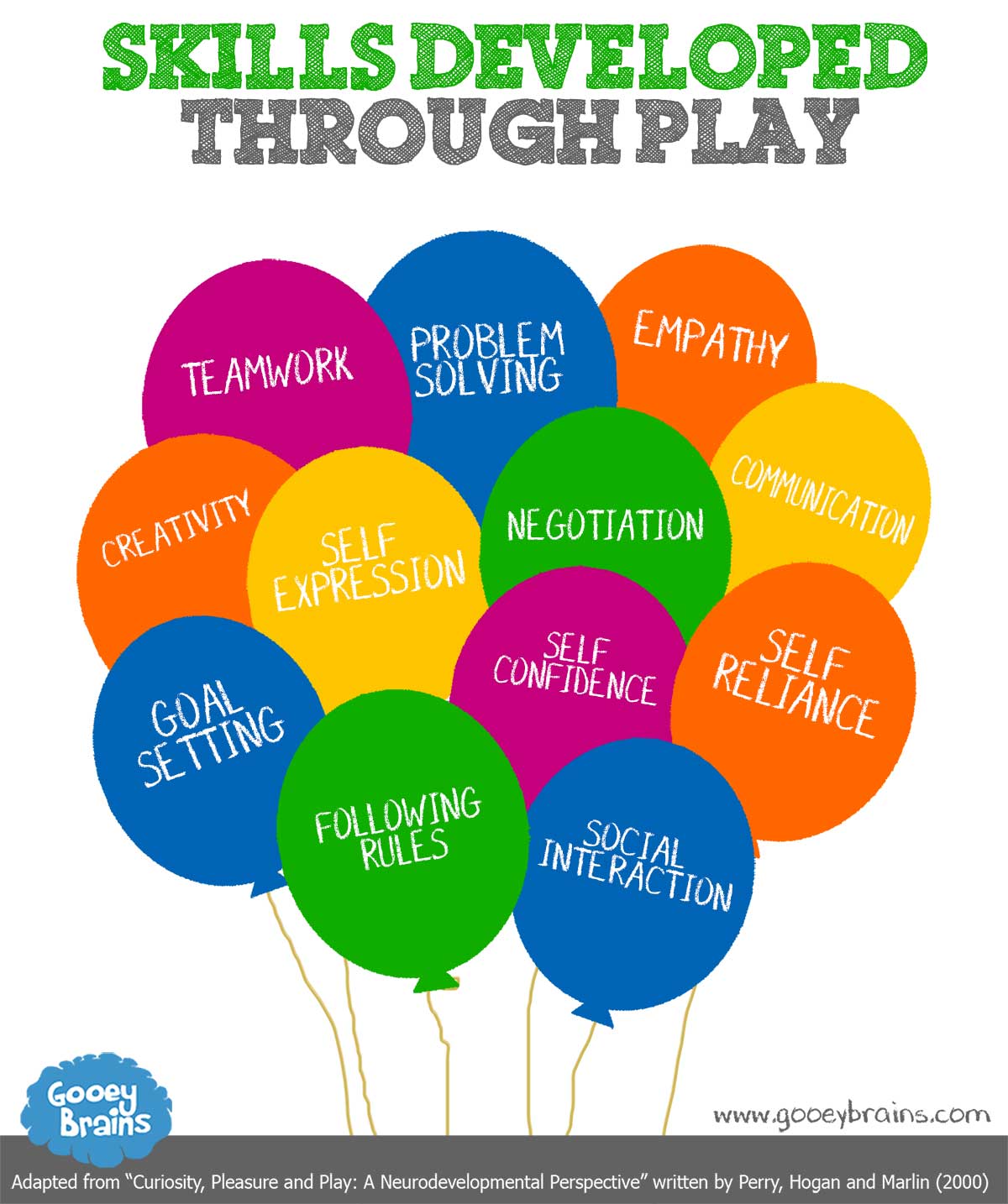
Skills developed through play, learning through play


I have been meaning to get to developing my why for ages now. So many ideas floating it has been hard to put them together. I guess I wanted to be able to come up with a 'one sentence wonder' and maybe it will take more than that.
I want to be able to put together ideas from a number of people and meld them into my own foundation.

Nathan Mikaere Wallis - Brain wave Trust
How a child sees themselves is crucial
Oral language for under 7's is vital
Boys particularly benefit from play-based learning
Creativity is linked to resilience and intelligence
Most learning is done through play


Leslee Allen- Number Agents
“It is paradoxical that many educators and parents still differentiate between a time for learning and a time for play without seeing the vital connection between them.” -Leo F. Buscaglia

We are so busy preparing children to be successful adults that we forget to embrace the brilliance of a child. Their honesty, often to the point of bluntness; their openness to new learning; their inquisitiveness; their quirky senses of humour and the way they can belly laugh at just about anything. Their ability to freely use their imaginations without the constraints of reality; their intelligence to be able to turn the tiniest, most obscure thing into a wonderful world of play; their inventiveness and their ability to truly be absorbed in the moment. Their innate ability to embrace difference; and their dispositions of wonder and joy. Not to mention their overwhelming ability to forgive. Children gradually learn to modify these behaviours to become what they think we need them to be, but maybe it is us that should be modifying ourselves. The world needs the qualities of a child, now more than ever. Bringing play back to classrooms could be just the answer we are looking for.

Leslee Allen Perhaps instead of a definition it would be useful to think of the components of what play looks like an environment that values child led play. Joy, wondering, child led discussion, children’s interests genuinely guiding learning, teacher as follower/provoker rather than director, developmental awareness, timetable free, narrative assessment valued, inside/outside, high trust, mutual agreement between learners and teacher. Not sure if I’m really making any point here lol, but perhaps you get what I mean? Just typing on my phone off the top of my head.

Longworth Education
Conversation is critical
Peer to peer conversations correlate to children's achievement
Developmentally appropriate response to the learning needs of students
Age and stage don't necessarily link!
Vygotsky and Piaget
Emotional intelligence is built
When engaged in authentic play, children are more likely to develop higher order cognitive and socio-emotional skills, particularly through problem solving

Tara O'Neill - Learning Through Play facebook page
 The learning comes through the authentic play. ‘Learning through play’.
Some schools get freaked out simply by the word ‘play’. It’s just simply developmentally appropriate inquiry šŸ¤·‍♀️ not scary. I’m with you on validating the word.
Tash Dunne


Paula Jamieson - Play, Make, Create

Five proven benefits of play:
Healthy brain development
Reduces obesity and associated diseases, particularly if children are running, jumping and climbing
Helps children manage stress
Helps families bond
Contributes to academic skills, in particular language development and general knowledge
From https://www.kqed.org/mindshift/52136/five-proven-benefits-of-play


In Room 1 we are Learning Through Play to help encourage critical, creative, innovative thinkers who are engaging in their learning in a developmentally appropriate way. There should be lots of talking, movement and creativity.

producing critianinnovative thinkers.

produtical, creative anthin

I am most keen on the idea of free play and have become more comfortable letting the children play outside, within the boundaries / rules we have set.
I am interested to see what ideas I get out of this Fridays workshop and whether that might change my thinking.

Currently we are in camp week so there is plenty of playing occurring.
Next week we will be back to a more normal programme. This involves lots of free play, individual reading time, class writing with varied goals, class and group maths.
I have some new plans for writing / phonics with some of the less advanced children.


Next steps:

  • Play, Make Create workshop on Friday
  • E modules through Longworth Education


TBCS - Camp Week - Judy-Anne


Last year, while the seniors were in Christchurch at their leadership camp, Margaret and I decided to have a camp week for those remaining at school.

There were a lot of requests for another one so we had one earlier in the year and decided to run another one while the Year 7 and 8's were on their tramp.

It always sounds like a great idea when we are planning it but the reality is always a lot of hard work and very tired teachers! Four hours fishing should be relaxing but add in 34 children...

So why do it then?

During camp week we are not in the classrooms undertaking reading, writing and maths but there is heaps of learning going on relating to key competencies, learning dispositions
and relationship based learning.

The key competencies underpin everything that happens in teaching and learning. (TKI)
The New Zealand Curriculum identifies five key competencies:
  • Thinking
  • Relating to others
  • Using language, symbols, and texts
  • Managing self
  • Participating and contributing
The term 'learning dispositions', sometimes called 'habits of mind' or 'dispositions to learning', refer to the way in which learners engage in and relate to the learning process. Learning dispositions affect how students approach learning and therefore the outcomes of their learning.Jun 21, 2017
Image result for Learning Dispositions"

Te Whariki Strand                                            Learning dispositions as actions
Mana whenua - Belonging                                  Taking an interest 
Mana atua - Well being                                       Being involved
Mana aoturoa - Exploration                                 Persisting with uncertainty and challenge
Mana reo- Communication                                  Expressing ideas and feelings
Mana tangata - Contribution                                Taking responsibility

Relationship Based Learning
Create a family like context for learning by:
Rejecting deficit explanations for learners' learning
Caring for and nurturing the learner, including their language and culture
Voicing and demonstrating high expectations
Ensuring that all learners can learn in a well-managed environment so as to promote learning
Knowing what learners need to learn

Interact within this family -like context in ways we know promote learning by:
Drawing on learners' prior learning
Using fornmative assessment feedback
Using formative assessment feed-forward
Using co-construction processes
Using power sharing strategies

Monitor learners' progress and the impact of the processes of learning by assessing how well learners are able to:
Set goals for their learning (GOALS)
Articulate how they prefer to learn (PEDAGOGY)
Explain how they prefer to organise/be organised in theri learning/learning relationships and interactions (INSTITUTIONS)
Participate in leadership roles and functions (LEADERSHIP)
Include others in the learning context and interactions (SPREAD)
Provide evidence of how well they are progressing and what progress they are making (EVIDENCE)
Take ownership of their own learning (OWNERSHIP)


Monday  - wheels day
Tuesday - visit to Vette's then lunch and the afternoon at school
Wednesday - fishing at the wharf, walk round the estuary
Thursday - day at school, staying for tea, campfire cooking damper
Friday - day at school, Christmas card making, water fight

What we saw was a huge amount of patience and perseverance, children co-operated to build huts and make shows with minimal teacher input. They problem solved independently, generally just asking teachers for supplies, or to watch their performances. They generally worked out their social issues for themselves. They looked after each other, particularly one little girl who spent much of her time with a potential new student. The boys also did a fabulous job of including our new boy. They thought for themselves about what to do within the day, they ate when hungry and visited the toilet when necessary. There weren't many compulsory activites during the week but everyone was expected to walk to the Vettes, go fishing and go on the estuary walk. There were a few grumbles about how long the walk was, but even the smallest managed the whole thing. (Actually they weren't the grumblers!)
Thus they had to think for themselves, play with children they might not generally spend time with, talk with others, relate their favourite part of the day and week, manage their needs and desires to ensure they enjoyed their days, take part and for hopefully provide ideas or leadership with various activities. It was very definitely a week of belonging to our school and sharing with the successes and joy of others. A number of people were very excited for Samuel and Zach when they caught the eel and the fish- I didn't hear anybody wishing it had been them instead. Children looked after their own well being as well as the well being of others, they definitely explored, they talked, they joined in.
There were moments of pure excitement and joy eg catching the eel and the kahawai. These moments were also well captured on film by Caleb, and shared on facebook by Olivia. Teachers have been sharing on See Saw and there will undoubtedly be writing about camp week in classes next week.

Feedback
Some of the highlights for the children were organised by the teachers
eg fishing, trip to Vettes, water fight, treasure hunt, carpentry, art and craft activities
Some were organised by the children eg fashion parade, dance shows
I'm not sure who thought of the eeling. We were at the Vette's and they have been feeding an eel in the pond. Someone obviously suggested trying to catch it so Louise helped them make fishing rods from a stick and a piece of string with a piece of meat from a dog bone tied onto it.
For some the highlight was having some previous students there with them on the last day


Reflection:
There were definitely some things we could have organised earlier eg thinking about toiletting issues for new boy- just made things a bit more frantic and stressful than necessary.
It may be a good idea to check into other fishing spots. The wharf was safe but the water was very fast flowing so not many nibbles even. In reality that may just have been a weather issue and it amy be fine other times- worth checking.

The eeling was a great addition. One boy lost his string in the water. Between a few of them they eventually fished it back. I imagine he will always ensure things are correctly fastened from now on! (he just tied the string onto the stick with a single knot)

Maybe we should have the campfire during the day again next time, the children who do not stay after school miss out on that otherwise. Hopefully getting the fire permit will be easier again now that I have used the new system once.

Kathryn is an awesome helper with art activities and was appreciative of the fact that there was no drama about what time she arrived or whether anything was planned or not. Funnily enough we had both found some very similar models and there are plenty of supplies in the school so it was easy enough to choose one for everyone interested to do and organise materials relatively quickly. It also meant the children could have some choice in the matter.

The children took a few days to get into the swing of things the first time we had a camp week. This time it took most of them a matter of minutes! There was the odd child wandering, rather aimlessly but for the most part they were busy the whole time. I hardly saw some of my boys as they were so busy riding their bikes or scooters, building huts, building in the sandpit...
The water fight was the nicest one I have seen at school. Children could choose whether or not to be involved, there were boundaries they had to remain inside and a safe zone when filling their water pistols. They were all careful of each other - no water deliberately sprayed directly in eyes or in such a way as to deliberately hurt as has happened during previous water fights. May just be the mix of children but hopefully it is also an improved culture of caring and looking out for each other. They all got very wet but had a lovely time- as it should be.


Camp week covers all the bases for catering to the whole person really and is basically what I am aiming for the whole time at school.
 I went to a course last night on Play, Make Create and am about to start an e-course of 6 modules covering the why and how to of Learning Through Play so will continue to build on my knowledge and refine my processes and utilisation of a Learning Through Play philosophy in Room 1.

Next steps:
Plan the next one!
Play, Make, Create research and use
Longworth Education E-modules


  • Fostering tuakana/tēina relationships.
  • Monitoring ākonga closely to ensure they are treated respectfully and are included in all aspects of school life.
  • Seeking ākonga and whānau feedback on these aspects
  • Promotion of positive and appropriate relationships with and between ākonga.
  • Monitoring of all ākonga closely to ensure they are being included and treated respectfully by their peers.

9 September 2019

TBCS - Fitting it All in - Judy-Anne


Fitting everything is one of the biggest areas of concern for teachers. You know what? You can not be everything to everyone all of the time. If you burn out, then the greatest resource in the classroom is extinguished. Here are some basic tips for fitting things in that I shared at my last workshop.
Aim to only read twice a week with children. Quality over quantity.
Change the time of day you do things each day, this means different slots will be used for play etc. We eat together and often do phonics at this time of day.
Set a goal of writing for five or ten minutes independently for all children depending on age, then let them go, while others can choose to stay. The ones that go, are usually the ones that need the play.
Start the day with play...that first 20 minutes of the day is generally when I get most of my photos for reflection and is also a good chance to fit one or two readers in.
Set weekly priorities, what are your goals for the week and then tick them off as done. This feels good!
Don't have a timetable, write it down, after you have done it, then you won't feel guilty at the end of the day when you have not managed to get to everything.

I'm pretty sure this came from Leslee Allen of Number Agents. 


Reflections:
I love this lady! She is so sensible and realistic.
Sometimes it is easier to just continue with the same thing rather than taking the time to think about the changes you want to make. I am slowly trying to change things in my class and want to use many of Leslee's ideas.
It is important to remember that if I burn out I am not any use to my class!

Next Steps:
I was wondering how to get the photos for the daily journal so using the first part of the day for that is very sensible.
Try changing the time of day we do things- good idea.
I am trying to remember to have food a few minutes before they go outside to play too so that they eat enough during the day.
Weekly priorities- brilliant.


Undertaking PLD and further professional reading.