STOP a community free from sexual abuse.
MOE training.
Managing incidents of sexualised play and behaviour in the school context (Years 1-8)
‘ Keep calm and keep your pants on’
Supporting and Equipping Teachers - A Positive and Proactive Approach
Key themes
Responding to incidents of sexual play & behaviour
Language and terminology
Values and rules in the school context
What is normal sexualised behavior?
When does sexualised behaviour become
concerning?
How teachers can equip students around playing
safely
R-rated material and social media
Best practice and process
When to consult and refer to the STOP Children’s
Service
Connecting with local agency supports
Facilitated by Sally-Ann Evans
Specialist Clinician Children’s Programme sally-ann.evans@stop.org.nz
Venues, date and times:
Motueka Golden Bay - St Johns Training Room, 15 Courtney St, Motueka
14th February 1-4:00
An interesting course, more attuned to secondary school, but still helpful to know how to deal with these issues. We are already using the techniques and skills required.
Outcome: A good reminder.
Next steps: continue with our procedures as before.
15 February 2019

9 February 2019
TBCS - Learning Through Play - My Why - Judy-Anne
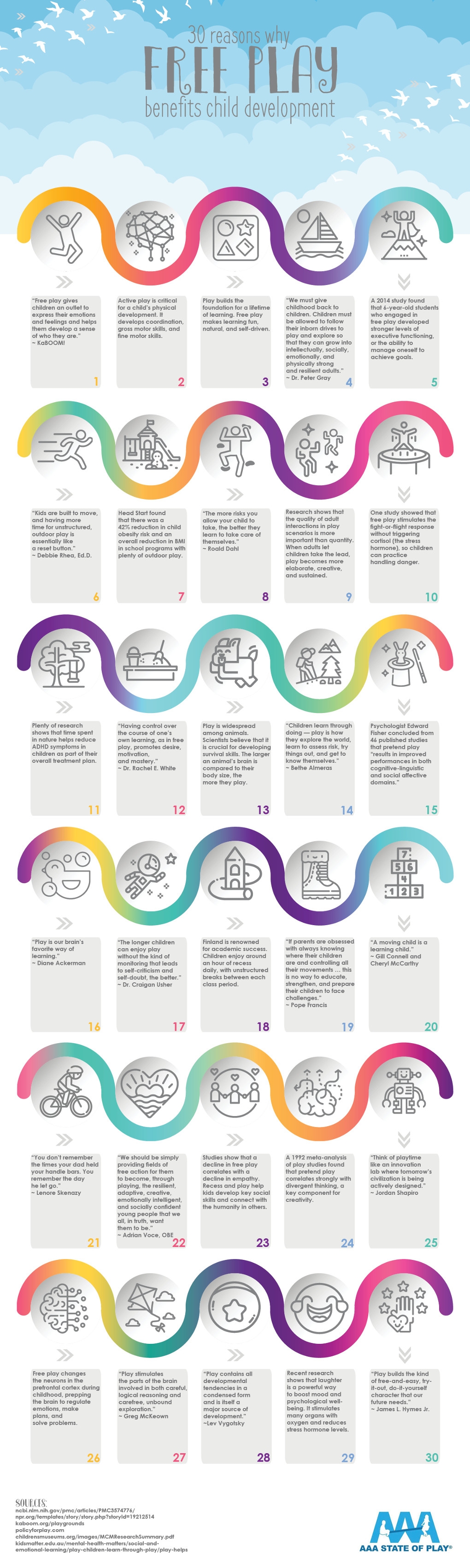
She asked if I would be able to, can't even think of the word, but elucidate will do, my Why for Play Based Learning.
She helped me realise that I have read a lot and have lots of ideas floating but I haven't tried to pull them all together in a clear, logical fashion.
I do know that I am more in agreement with the idea of child directed free play than more teacher directed set ups and provocations. I am also trying to work out how we can be more involved with outside play and nature.
Next steps:
Sit down with my readings and brain storm my Why?
Brain storm more Hows.
Attend Nathan Mikaere- Wallace's next talk in Nelson- April 10?
Current sources are:
Longworth Education
Tara O'Neill and Learning through Play face book page
Leslee Allen and Number Agents face book page
Nathan Mikaere -Wallis, Brain Wave Trust
Standard 4 - Learning Focused Culture
- Discussing my practice with colleagues and being open to new ideas.
- Promotion of positive and appropriate relationships with and between ākonga.
8 February 2019
Steve - TBCS - 8 Feb 2019 - Kapa Haka
The NZC Online newsletter February 2019 reported on
Whare Isaac Sharland, CORE Education facilitator, explains how Kapa Haka can help students develop a positive cultural identity resulting in increased confidence, engagement, and achievement.
It was nice to read the blog http://nzcurriculum.tki.org.nz/Curriculum-resources/NZC-Online-blog/Kapa-haka
We had in the past continued with the use of Kapa Haka to inform students about Te Reo through the translations of waiata and games to enhance their spoken language.
Next Steps: share this information with staff. Read the
Future focus – Ideas for teacher practice and I look forward to your feedback.
07/02/19

Ko Tāwhiuau rāua ko Hikurangi ōku maunga.
Kō Waiawa rāua ko Rangitaiki ōku awa.
Ko Ngati Whare rāua ko Ngāti Ruapani ōku hapū.
He uri ahau ō Ngāti Kahungunu ki Te Wairoa, rāua ko Ngāti Manawa ki Murupara.
Ngā tukemata ō Kahungungu, ko Tangiharuru te tangata, ko Apa-Hāpai-Take-Take te whare.
Ko Whare Isaac-Sharland tōku ingoa.
Tēnā koutou katoa.
Project origins
In 2016 I was astonished to hear a parent suggest that kapa haka provides no real potential for our tamariki, and disappointed that this viewpoint was supported by other teaching staff within our Te Aho Matua kura.
When I was growing up kapa haka was my salvation. I’m not sure if I would have survived mainstream secondary school if I didn’t have kapa haka to enjoy three times each week. Kapa haka allowed me to reconnect with my tūpuna and see myself in the learning – the practices were sacred to me.
Through kapa haka I gained confidence, I grew hungry for further knowledge about my culture, I found the place where I belonged after feeling alienated from my learning environment for so long. These experiences increased my confidence, contributed towards a positive identity of myself, reconnected me to kaupapa tuku iho such as whakapapa, whānau, te reo Māori me ōna tikanga. In short, kapa haka helped me further value my taha Māori.
However, a void seems to exist where some Māori parents, teachers, and whānau cannot align the benefits of kapa haka with positive student learning. A clear path of understanding needs to be created, in order that the positive transformational learnings of kapa haka can be realised by ākonga, whānau, and kaiako.
There is very little research around the impact of kapa haka on learning, language, culture, and identity. From personal experience and practice, I have an intuitive hunch that kapa haka provides invaluable insights because it is based on the validation of the diverse and rich fabric inherent within Māori systems of knowledge. My experiences in the world of kapa haka provided me with a line of inquiry, and ensured the lens throughout my 2017 research project remained kaupapa Māori focused.
Ngā mahi o te rēhia – Understanding kapa haka
Kapa haka is much more than a 20 minute competitive bracket. It is a catalyst for change that has a fundamental link to, and is a powerful medium of Māori identity, culture, and pride.
Kapa haka plays a large role in the revitalisation of the Māori language and Māori cultural values. It enhances positive well-being by encouraging a sense of belonging, providing a "safe haven" in which to practice te reo me ōna tikanga, whilst reinforcing social collaboration and cohesion. These understandings are capitalised upon within this research.
My research methodologies
Kaupapa Māori methodology (Smith, 1997) was my underlying research approach, and is deeply embedded throughout the project’s infrastructure. Although kaupapa Māori theory continues to evolve, it is often considered to be a theory that:
- literally envelopes “a Māori way"
- connects to Māori philosophy and principles
- validates and legitimises Māori systems of knowledge
- values the importance of Māori language and culture
- assumes Tino rangatiratanga over our own cultural well-being.
This project acknowledges and values Māori ways of knowing such as the absolute entrenchment of te reo Māori me ōna tikanga, and aims to create positive results that progress Māori aspirations (Pihama et al., 2004). An insider researcher (Walter, 2010) approach was also applied.
The notion of student voice was also part of my methodology, encompassing the traditional Māori values of “talking story” as a wayfinding mechanism. There were no limitations to how students could express their ideas and beliefs, which gave students the opportunity to create a meaningful project for themselves as well. This was achieved by encouraging students to help me understand what Kapa Haka means to them, alongside hui to assist students in identifying and explaining the myriad of feelings they were experiencing.
Two guiding questions were identified and were the basis for my project findings:
Project findings
My inquiry found that kapa haka does have the potential to positively influence student learning. This occurs in the way kapa haka makes students feel; more specifically, the positive feelings that students experience when doing or watching kapa haka. This understanding could lead to improved teacher practices.
Students are at the heart of this project. Their voices and experiences were integral within this study. My findings could influence decisions that are made about teaching and learning programmes for Māori and non-Māori students alike. There is much potential to transform classroom practices by utilising the legitimacy and validity of kapa haka as a solid culturally preferred practice that enhances student learning and positively influences student outcomes.
Furthermore, the impact on teacher practices could potentially contribute a structured student learning programme that elevates kapa haka as a mana enhancing approach to teaching and learning, reinforcing positive student outcomes.
Kapa haka is an act of disruption and reclamation

As an educated adult, I advocate the notions of disruption and reclamation. I choose to disrupt non-Māori cultural and educational norms by advocating for kapa haka as a powerful teaching and learning approach. I do this by normalising Māori language and kapa haka within Māori and non-Māori worlds. For me, this is an act of reclamation of tāonga tuku iho Māori, which validates our traditions, knowledge, and ways of being, ensuring they are not lost to us.
The misunderstanding demonstrated by various individuals, whānau, and educators alike that kapa haka has no worth, has no value, and therefore can make no real contribution to learning programmes leaves me apprehensive for the future of our tamariki. This belief, by implication, deems Māori culture as unworthy and without value within our schooling system.
Many of our students continue to be marginalised by our mainstream learning environments. It is these akonga that have so much more to lose if actions are not taken now. I suggest the pedagogy and content of kapa haka can act as a positive intervention in these settings.
Future focus – Ideas for teacher practice
This project is merely a beginning point. Despite being small-scale, from a culturally responsive perspective it propels school, kura, kaiako, and whānau to look seriously at the academic and social merits of kapa haka and its significance in nourishing whakapapa, language, culture, and identity.
This is not my story alone. This is the story of my students as well. They revealed all the same reasons that I needed kapa haka as a young Māori teenager finding my way 30 years ago. The lens on kapa haka needs adjusting to better reflect the true nature of kapa haka and their voices clearly support this.
There is potential for a more comprehensive examination of how kapa haka could positively assist with Māori student learning in both Māori and English mediums.
I invite kaiako to take up a challenge: Think about performing groups in your kura or other local kura. Look at the richness each group performance brings, and how a whole curriculum can emerge from a 20-minute performance. If you can understand what kapa haka does or what it could do, and build this across school curriculum, how might you use this knowledge as an enabler to transform your teaching practices?
Subscribe to:
Posts (Atom)