21 November 2019

TBCS - Craig - Deliberate Acts of Teaching - Maths


Teaching Maths


Maths is one subject I love to teach. I have seen such pleasing progress in all my students. Most of my students are happy to do their Math lessons, and some will even choose to do it at break times or when they have finished other work. I have had a multi-faceted approach to teaching Maths this year.
This year, I have had students working at all the Grade levels from Year 1 - Year 7


My deliberate acts of teaching have included...

  • Testing each student at the beginning of the year to access where they are.
  • Each student is placed at the appropriate level for their skills in the Maths Buddy Programme that the School Uses. (Please see my Blogg on Maths Buddy)
  • Monitor how each student is doing by roaming the room constantly and encouraging and giving help where needed.
  • Monitoring each student through my laptop after hours to identify students who need particular help or groups of students who need help in a particular area and writing them in my weekly planning folder.
  • At the beginning of most lessons, students who needed extra help are brought down to a table so I can help them as individuals or in groups as required. They will go back to their individual desks once they are confident and have passed the lesson they were stuck on.
  • Setting a minimum achievement rate of 80% or more in any given lesson before allowing a student to move on.
  • Year 6 students are to complete a Diagnostic test at the end of each section to ensure all lessons have been learned. If gaps are identified in their learning, they are required to redo those identified lessons again to ensure they are confident before they move on.
  • The emphasis I encourage is not on completing a certain about of work or working at a certain speed, but on learning the concepts and being able to confidently use them, especially in Problem Solving situations. 
  • I encourage students to redo lessons, even if they have passed them at 80% if they are not completely confident in themselves.
  • I place an emphasis on learning times tables which we start every day with.
  • I get the students to do warm-up activities of times tables before they go on with their lessons.
  • If there are particular lessons that the whole class needs to learn, I will gather the whole class around the board and we will go over them together. These have included... 
                      -  Understanding mathematical words like addends and sums, minuends, subtrahends,                              and differences, etc.
                      -  Greater than and less than
                      -  Rounding
                      -  Telling the time.
                      -  And other issues identified in daily classwork or testing such as e-asttle.

  • I try to know where each student is at, and plot their progress on an XL spreadsheet to help me have an overview of the whole class.

Next Steps

Place a bigger emphasis on learning Time Tables and add a Times Tables test at the end of each week to keep the spotlight on our need to know them by rote.

Be more forthright with the expectation that the lessons need to be learned and not just passed. This will include encouraging the students to use a star chart to indicate how confident they are at the end of every lesson, so they can revisit or redo lessons that may have been passed but not confidently grasped.

Make better use of the e-asttle tests that the class sits to identify areas of weakness and get more group work established based on what is identified at the time.


Standard 6
Teach in ways that ensure all learners are making sufficient progress, and monitor the extent and pace of learning, focusing on equity and excellence for all.

Standard 5
Select teaching approaches, resources, and learning and assessment activities based on a thorough knowledge of curriculum content, pedagogy, progressions in learning and the learners.

Standard 4
Manage learning setting to ensure access to learning for all and to maximise learner's physical, social, cultural, and emotional safety.


16 November 2019

TBCS - Deliberate Acts of Teaching - Judy-Anne


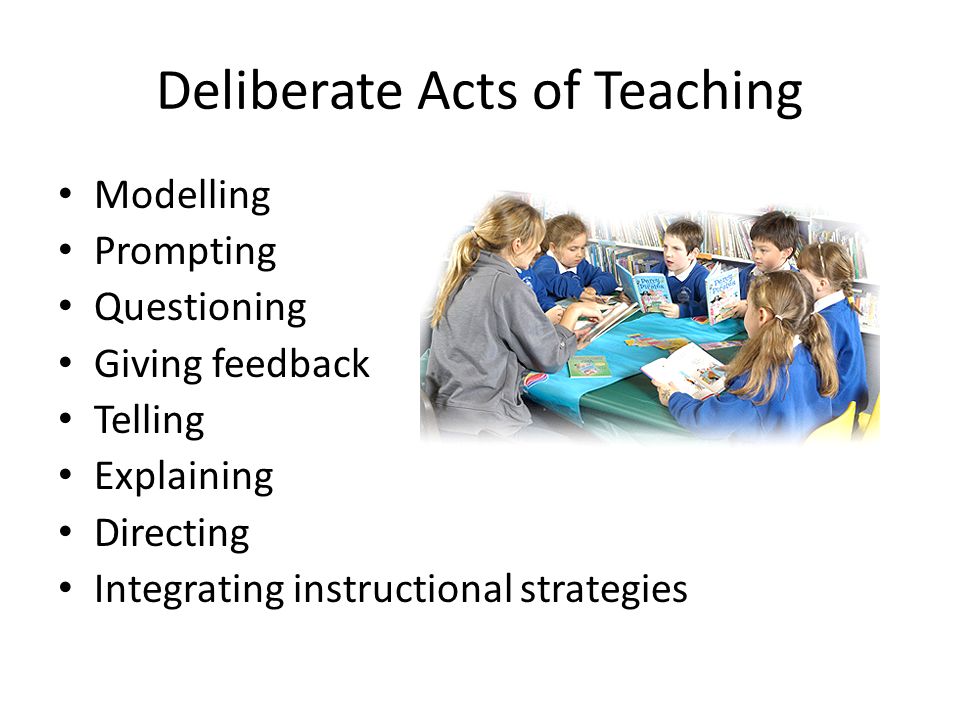
Instructional strategies are the tools of effective practice. They are the deliberate acts of teaching that focus learning in order to meet a particular purpose. Instructional strategies are effective only when they impact positively on students’ learning.
Effective Literacy Practice in Years 5 to 8, p. 78
Teachers need to be able to use a range of deliberate acts of teaching in flexible and integrated ways within literacy-learning activities to meet the diverse literacy learning needs of our students.

Deliberate Acts of Teaching


Apparently ERO feels we weren't able to show that we were teaching our children, and were too reliant on a use of technology to do so.
Therefore somehow we need to get better at showing what it is that we actually do!


I checked to see what were classified as 'Deliberate Acts of Teaching.'
Sometimes you just need to use the right jargon. This is something I have tried to avoid throughout my career as I have seen a number of people use jargon as a weapon to show that they know more than others. My pet peeve is 'pedagogy!' I would much rather say things in a way that everybody can understand- isn't that why we are supposed to write plain English, easy to understand reports?

Pedagogy: 

What is Pedagogy?

Pedagogy is defined simply as the method, and practice, of teaching. It encompasses: 
When people talk about the pedagogy of teaching, they will be referring to the way teachers deliver the content of the curriculum to a class.


My challenge is not using the Deliberate Acts of Teaching (I hope!) so much as it is in recording them.

To help I think I will print out the list of deliberate acts of teaching and store them at the front of my planner.
I also need to add those specific words to some generic, as well as specific plans eg handwriting and phonics will include modelling and feedback
Maybe the words can be highlighted or colour coded and specific questions I am planning to use, or do actually use can be recorded in a regular fashion, whether daily, weekly, per lesson type...

Next steps:
. Print deliberate acts of teaching and put in planner
. Record at least one deliberate act of teaching in planner each week, increasing frequency as it becomes a habit
. Aim to complete the daily class journal daily!
I also found a great lesson plan about simple sentences which outlines DATS through out


  • Use of inquiry to inform planning and teaching.
  • Checking to see if planning and delivery of programme is tailored to the strengths, needs and interests of ākonga.
  • Using appropriate pedagogies to accelerate progress of ākonga who are achieving below national expectations

TBCS - Learning Through Play: My Why - Judy-Anne

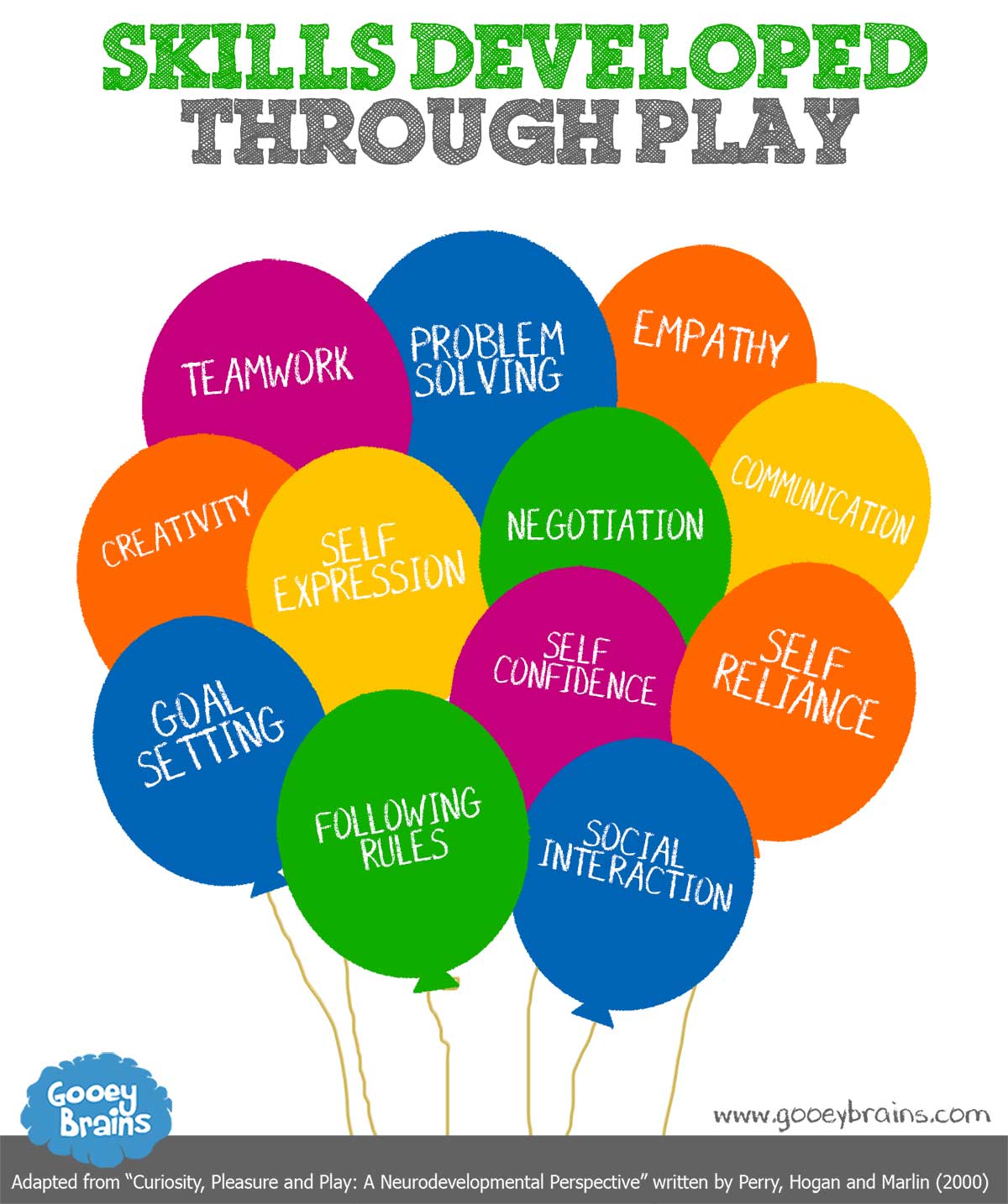
Skills developed through play, learning through play


I have been meaning to get to developing my why for ages now. So many ideas floating it has been hard to put them together. I guess I wanted to be able to come up with a 'one sentence wonder' and maybe it will take more than that.
I want to be able to put together ideas from a number of people and meld them into my own foundation.

Nathan Mikaere Wallis - Brain wave Trust
How a child sees themselves is crucial
Oral language for under 7's is vital
Boys particularly benefit from play-based learning
Creativity is linked to resilience and intelligence
Most learning is done through play


Leslee Allen- Number Agents
“It is paradoxical that many educators and parents still differentiate between a time for learning and a time for play without seeing the vital connection between them.” -Leo F. Buscaglia

We are so busy preparing children to be successful adults that we forget to embrace the brilliance of a child. Their honesty, often to the point of bluntness; their openness to new learning; their inquisitiveness; their quirky senses of humour and the way they can belly laugh at just about anything. Their ability to freely use their imaginations without the constraints of reality; their intelligence to be able to turn the tiniest, most obscure thing into a wonderful world of play; their inventiveness and their ability to truly be absorbed in the moment. Their innate ability to embrace difference; and their dispositions of wonder and joy. Not to mention their overwhelming ability to forgive. Children gradually learn to modify these behaviours to become what they think we need them to be, but maybe it is us that should be modifying ourselves. The world needs the qualities of a child, now more than ever. Bringing play back to classrooms could be just the answer we are looking for.

Leslee Allen Perhaps instead of a definition it would be useful to think of the components of what play looks like an environment that values child led play. Joy, wondering, child led discussion, children’s interests genuinely guiding learning, teacher as follower/provoker rather than director, developmental awareness, timetable free, narrative assessment valued, inside/outside, high trust, mutual agreement between learners and teacher. Not sure if I’m really making any point here lol, but perhaps you get what I mean? Just typing on my phone off the top of my head.

Longworth Education
Conversation is critical
Peer to peer conversations correlate to children's achievement
Developmentally appropriate response to the learning needs of students
Age and stage don't necessarily link!
Vygotsky and Piaget
Emotional intelligence is built
When engaged in authentic play, children are more likely to develop higher order cognitive and socio-emotional skills, particularly through problem solving

Tara O'Neill - Learning Through Play facebook page
 The learning comes through the authentic play. ‘Learning through play’.
Some schools get freaked out simply by the word ‘play’. It’s just simply developmentally appropriate inquiry 🤷‍♀️ not scary. I’m with you on validating the word.
Tash Dunne


Paula Jamieson - Play, Make, Create

Five proven benefits of play:
Healthy brain development
Reduces obesity and associated diseases, particularly if children are running, jumping and climbing
Helps children manage stress
Helps families bond
Contributes to academic skills, in particular language development and general knowledge
From https://www.kqed.org/mindshift/52136/five-proven-benefits-of-play


In Room 1 we are Learning Through Play to help encourage critical, creative, innovative thinkers who are engaging in their learning in a developmentally appropriate way. There should be lots of talking, movement and creativity.

producing critianinnovative thinkers.

produtical, creative anthin

I am most keen on the idea of free play and have become more comfortable letting the children play outside, within the boundaries / rules we have set.
I am interested to see what ideas I get out of this Fridays workshop and whether that might change my thinking.

Currently we are in camp week so there is plenty of playing occurring.
Next week we will be back to a more normal programme. This involves lots of free play, individual reading time, class writing with varied goals, class and group maths.
I have some new plans for writing / phonics with some of the less advanced children.


Next steps:

  • Play, Make Create workshop on Friday
  • E modules through Longworth Education


TBCS - Camp Week - Judy-Anne


Last year, while the seniors were in Christchurch at their leadership camp, Margaret and I decided to have a camp week for those remaining at school.

There were a lot of requests for another one so we had one earlier in the year and decided to run another one while the Year 7 and 8's were on their tramp.

It always sounds like a great idea when we are planning it but the reality is always a lot of hard work and very tired teachers! Four hours fishing should be relaxing but add in 34 children...

So why do it then?

During camp week we are not in the classrooms undertaking reading, writing and maths but there is heaps of learning going on relating to key competencies, learning dispositions
and relationship based learning.

The key competencies underpin everything that happens in teaching and learning. (TKI)
The New Zealand Curriculum identifies five key competencies:
  • Thinking
  • Relating to others
  • Using language, symbols, and texts
  • Managing self
  • Participating and contributing
The term 'learning dispositions', sometimes called 'habits of mind' or 'dispositions to learning', refer to the way in which learners engage in and relate to the learning process. Learning dispositions affect how students approach learning and therefore the outcomes of their learning.Jun 21, 2017
Image result for Learning Dispositions"

Te Whariki Strand                                            Learning dispositions as actions
Mana whenua - Belonging                                  Taking an interest 
Mana atua - Well being                                       Being involved
Mana aoturoa - Exploration                                 Persisting with uncertainty and challenge
Mana reo- Communication                                  Expressing ideas and feelings
Mana tangata - Contribution                                Taking responsibility

Relationship Based Learning
Create a family like context for learning by:
Rejecting deficit explanations for learners' learning
Caring for and nurturing the learner, including their language and culture
Voicing and demonstrating high expectations
Ensuring that all learners can learn in a well-managed environment so as to promote learning
Knowing what learners need to learn

Interact within this family -like context in ways we know promote learning by:
Drawing on learners' prior learning
Using fornmative assessment feedback
Using formative assessment feed-forward
Using co-construction processes
Using power sharing strategies

Monitor learners' progress and the impact of the processes of learning by assessing how well learners are able to:
Set goals for their learning (GOALS)
Articulate how they prefer to learn (PEDAGOGY)
Explain how they prefer to organise/be organised in theri learning/learning relationships and interactions (INSTITUTIONS)
Participate in leadership roles and functions (LEADERSHIP)
Include others in the learning context and interactions (SPREAD)
Provide evidence of how well they are progressing and what progress they are making (EVIDENCE)
Take ownership of their own learning (OWNERSHIP)


Monday  - wheels day
Tuesday - visit to Vette's then lunch and the afternoon at school
Wednesday - fishing at the wharf, walk round the estuary
Thursday - day at school, staying for tea, campfire cooking damper
Friday - day at school, Christmas card making, water fight

What we saw was a huge amount of patience and perseverance, children co-operated to build huts and make shows with minimal teacher input. They problem solved independently, generally just asking teachers for supplies, or to watch their performances. They generally worked out their social issues for themselves. They looked after each other, particularly one little girl who spent much of her time with a potential new student. The boys also did a fabulous job of including our new boy. They thought for themselves about what to do within the day, they ate when hungry and visited the toilet when necessary. There weren't many compulsory activites during the week but everyone was expected to walk to the Vettes, go fishing and go on the estuary walk. There were a few grumbles about how long the walk was, but even the smallest managed the whole thing. (Actually they weren't the grumblers!)
Thus they had to think for themselves, play with children they might not generally spend time with, talk with others, relate their favourite part of the day and week, manage their needs and desires to ensure they enjoyed their days, take part and for hopefully provide ideas or leadership with various activities. It was very definitely a week of belonging to our school and sharing with the successes and joy of others. A number of people were very excited for Samuel and Zach when they caught the eel and the fish- I didn't hear anybody wishing it had been them instead. Children looked after their own well being as well as the well being of others, they definitely explored, they talked, they joined in.
There were moments of pure excitement and joy eg catching the eel and the kahawai. These moments were also well captured on film by Caleb, and shared on facebook by Olivia. Teachers have been sharing on See Saw and there will undoubtedly be writing about camp week in classes next week.

Feedback
Some of the highlights for the children were organised by the teachers
eg fishing, trip to Vettes, water fight, treasure hunt, carpentry, art and craft activities
Some were organised by the children eg fashion parade, dance shows
I'm not sure who thought of the eeling. We were at the Vette's and they have been feeding an eel in the pond. Someone obviously suggested trying to catch it so Louise helped them make fishing rods from a stick and a piece of string with a piece of meat from a dog bone tied onto it.
For some the highlight was having some previous students there with them on the last day


Reflection:
There were definitely some things we could have organised earlier eg thinking about toiletting issues for new boy- just made things a bit more frantic and stressful than necessary.
It may be a good idea to check into other fishing spots. The wharf was safe but the water was very fast flowing so not many nibbles even. In reality that may just have been a weather issue and it amy be fine other times- worth checking.

The eeling was a great addition. One boy lost his string in the water. Between a few of them they eventually fished it back. I imagine he will always ensure things are correctly fastened from now on! (he just tied the string onto the stick with a single knot)

Maybe we should have the campfire during the day again next time, the children who do not stay after school miss out on that otherwise. Hopefully getting the fire permit will be easier again now that I have used the new system once.

Kathryn is an awesome helper with art activities and was appreciative of the fact that there was no drama about what time she arrived or whether anything was planned or not. Funnily enough we had both found some very similar models and there are plenty of supplies in the school so it was easy enough to choose one for everyone interested to do and organise materials relatively quickly. It also meant the children could have some choice in the matter.

The children took a few days to get into the swing of things the first time we had a camp week. This time it took most of them a matter of minutes! There was the odd child wandering, rather aimlessly but for the most part they were busy the whole time. I hardly saw some of my boys as they were so busy riding their bikes or scooters, building huts, building in the sandpit...
The water fight was the nicest one I have seen at school. Children could choose whether or not to be involved, there were boundaries they had to remain inside and a safe zone when filling their water pistols. They were all careful of each other - no water deliberately sprayed directly in eyes or in such a way as to deliberately hurt as has happened during previous water fights. May just be the mix of children but hopefully it is also an improved culture of caring and looking out for each other. They all got very wet but had a lovely time- as it should be.


Camp week covers all the bases for catering to the whole person really and is basically what I am aiming for the whole time at school.
 I went to a course last night on Play, Make Create and am about to start an e-course of 6 modules covering the why and how to of Learning Through Play so will continue to build on my knowledge and refine my processes and utilisation of a Learning Through Play philosophy in Room 1.

Next steps:
Plan the next one!
Play, Make, Create research and use
Longworth Education E-modules


  • Fostering tuakana/tēina relationships.
  • Monitoring ākonga closely to ensure they are treated respectfully and are included in all aspects of school life.
  • Seeking ākonga and whānau feedback on these aspects
  • Promotion of positive and appropriate relationships with and between ākonga.
  • Monitoring of all ākonga closely to ensure they are being included and treated respectfully by their peers.

9 November 2019

TBCS - Decodable Texts - Judy-Anne


Inquiry:

So I had been seeing posts on Facebook pages about decodable texts and how amazing they are but didn't know what they were or why they were so great, and I also wasn't sure how to get new resources with an empty money pot!

I did a little research on them today and discovered they are phonics based. There are heaps of free ones available, some online and some that you can print but looking at them I realise we have some of them sitting in the back room as well. What a bonus!

I am wondering whether increasing use of phonics and decodable texts will help my youngest boys with their reading at a more accelerated pace.

Action Plan:

. Set up the phonics song on the sample student on seesaw so they can access it for themselves more readily
. use decodable texts with Samuel, Beauden, William and Elijah
.continue to work on blends with the whole class


Chalking on Blogger

Decodable books


  • Undertaking PLD and further professional reading.
  • Engaging with school-wide inquiry approaches as expected.


  • Use of inquiry to inform planning and teaching.
  • Checking to see if planning and delivery of programme is tailored to the strengths, needs and interests of ākonga.
  • Using appropriate pedagogies to accelerate progress of ākonga who are achieving below national expectations.

29 October 2019

TBCS - Deliberate Acts of Teaching - Writing - Margaret

Inquiry - Does allowing students to choose according to their interests what they wish to write about improve motivation to write and overall writing levels?

6 students have been identified as achieving below their expected level in writing.  This has been determined from asttle writing tests, observations of students in class, daily writing samples.  Their overall motivation to write is low and writing that is done uses improper sentence structure, lack of detail and ideas expected at a year 6/7/8 level.

Strategies used:

Splitting class into groups of boys/girls to brainstorm together possible persuasive writing topics in practice for assessment based on interest.

Brainstorming together a list of possible interests to write to our focus on persuasive writing.  Teacher chooses 1 to write together as shared writing.

Shared writing

Read together an article related to chosen topic - use this to help brainstorm.

Brain storm as a  class ideas that we can use to persuade.  Benefits, experiences.  Questioning to draw out ideas.  What are the benefits of havng a pet?  How would this benefit the teacher?  How can pets help us?

Model how to write an introduction with student suggestions
Model how to write our first paragraph using one of our ideas, using persuasive language - write a list of persuasive language that students can select from.
Independent - students to write their second and third paragraph independently.
Model how to write a conclusion.
Independent - students write their own conclusion.

During next session students choose which topic they would like to write about using the model as a guide.


Reading together a variety of persuasive writing from Mainsails then having students select which topic they want to write about

Class is given a selection of persuasive texts from Mainsails.  In pairs they choose which ones they would like to read.  Students read together and note down 3 main ideas from their favourites.

Select one that has had the most interest to break down together

Questioning
Look at the intro, body and conclusion
What persuasive language was used?  What are the main ideas for each paragraph?  Has the author used examples to back up their ideas?  Who are they trying to convince?
Model a plan on the board.

Students choose which persuasive topic either from the book or their own to write.

Journals/Free writing/competitions

Students given free writing journals - not to be marked
Brainstorm as a class ideas we may like to write about in our jounals - students to write all this up in their books to prompt ideas.  Use questioning to draw out ideas - What are your interests, what styles of writing do we like to use?  What do we like to read/do?

20 mins of free writing daily with 5 mins to check over what they have written

Feedback

Students share their daily writing with the class if they choose.  Use our feedback guide that was taught at the start of the year - a compliment, a suggestion, editing.

Students to select 1 piece of writing each week/fortnight to publish.  Use the writing process/ peer editing process taught at the start of the year to improve it.  Conference with me or feedback using google docs before final copy is published.

TBCS - Craig - Inquiry - Reading - Phonics


Background

I teach a Year 4-6 class which has a wide range of abilities. I was excited to have new students join my class. One, in particular, a year 4 student I will call "N" came to my class with the label of Dyslexia. It became apparent very early one that she was unable to read. She had not been taught Reading or Writing at all and was functioning at a Year 1 level. What a challenge!
I come from a school where every student was taught using a comprehensive phonics programme and I saw the results with my own children and with the other students I taught in the school. Would this work for N?
Lexia, our normal programme for foundational reading training is not working for her. She was assessed at a year one level and with no prior learning in sounds and no word attack skills, she is struggling and I need to think of another way to help her learn...

Question

How can I best help N  catch up 4 years of learning in English?

Inquiry

Can teaching a full phonics programme to N help her to read and therefore write and reach a Level 2 level in her work?

......................................................

From the book, "Effective Literacy Practice in Years 1-4" Ministry of Education, pg 32

"In order to become readers and writers, children need to develop a knowledge of the name and sounds of the letters of the alphabet and of letter-sound relationships."

"Children do not have to be able to name every letter of the alphabet before they begin formal instruction in reading and writing. They do, however, need to develop phonemic awareness and to understand that there is a relationship between spoken sounds and the letters that represent them."

"Phonemic awareness is fundamental to early success in reading and writing. It enables children to develop the understanding of letter-sound relationships that is essential to decoding and encoding. Children have to be able to distinguish sounds before they can match them with the letters that represent them."

"An understanding of phonics also underpins children's literacy learning. Children need to learn through deliberate, focused instruction, which letters represent which sounds. they learn a great deal about letter-sound relationships through writing. Beginning writers constantly engage with the problem of which letters represent the sounds in the words they want to use. In doing so, they lay a sound basis of knowledge about relationships between letters and sounds. Effective teaching helps writing the understandings they gain during reading and oral language activities."

......................................................

From the "New Zealand Curriculum" Level One English

Listening. Reading, and Viewing
Processes and strategies
Students will...

Acquire and begin to use sources of information, processes, and strategies to identify, form, and express ideas.

Indicators
  • has an awareness of the connections between oral, written, and visual language.
  • uses sources of information (meaning, structure, visual and grapho-phonic information) and prior knowledge to make sense of a range of texts.
  • associates sounds with letter clusters as well as with individual letters.

......................................................

S.E.N.C.O's help was sort.

I tested N in

Maths (J.A.M), Working at Level 1
Reading (Running Record) Level 1 at 50% accuracy
Writing (Sample) 10 minute unassisted  10 words 40% correct.
Spelling (Essential Selling Lists) 5/10 for list 1. 6/20 for list 2

N was separately tested for letter names, both upper and lower case and short sounds of letters.
Letter names 19/26 Short sounds 22/26 Blends7/36

An application was lodged with the R.T.L.B with an I.C.S (In Class Support) Assesment asking for an hour a day teacher aid time to help N and give me extra time to help her.

I talked through the issue with my principal. I shared with him that I wanted to use the phonics programme that had been developed in my last school. He agreed to contact my last school to seek permission to use the programme. Permission was given.

In a meeting with the principal and S.E.N.C.O we talked through the best method of delivery and could we find or modify any teacher aid hours to free me to run this programme with her. It was agreed that room 4 could decrease their time with the teacher aid, giving me 20 mins 4 times a week to run this programme with her.

The programme comprises of 115 individual sheets that cover all letter sounds short and long, blends,

The programme will be delivered in a one on one situation using the sheets along with the teaching strategies of modeling, prompting, questioning, giving feedback, and explaining. (Effective Literacy Practice, Deliberate acts of Teaching pg 76-87)

15th August We started. Spent time on alphabet letter names and short sounds of letters. There were several letters she stumbled on. Three, in particular, were b, d, and p. The sheet worked on the short 'a' sound.

16th August We revised the alphabet letter sounds, redid sheet 1 to check that what we had learned the day before had been 'caught' and introduced sheet 2 which was also on the short 'a' sound.

A similar pattern is followed each session. We always go through all the letter sounds to start. We revise the sheet from last time. I introduce the new sheet. I only shart a new sheet if the previous sheet is completed without error.

The sheets explored the short sounds a, e, i, o, u, and them reviewed them for several sheets.

17 September Sheet 9. We have completed the short sounds of the vowels and are beginning the blends.
It takes a little for N to catch on, but with some modeling, prompting, and explaining, she catches on and we complete the first of the blends.
She quickly takes the concept on board and makes blends of other letters that are not being targetted by the sheets, showing good thought process and transference of knowledge.

16th October Sheet 16. This sheet is working on blends at the ends of words - ft, ld, lf, lk, lp, lt. the blends are not so hard, but the 'e' in the middle of some of the words trip her up. Words like self, weld, and felt with a short e sound that doesn't seem to fit was a stumbling block. I ended up teaching her that 'el' says long l. This departed a little from the lesson with ending blends but made more sense. It took 4 consecutive goes to complete this sheet.

29 October Sheet 18. Today we looked at the ending 'ng'. N made good progress and we will go through the sheet again tomorrow.

Exciting News! N got back to class after completing her phonics lesson and managed to complete 15 units in Lexia! She is transferring what she is learning and it is making a big difference in her classwork. She is proud of herself and I am proud of her too!

31 October Sheet 19. We looked at end blends 'nk' and 'nt'. Steve observed my lesson and in discussion with N after the observation, he found out that I also get N to copy out the words on the sheet. This helps her not only learn the sounds, but also to learn how to correctly form the letters. This is done as an extra to Penmanship which is taught separately. Steve found out that she didn't say the sounds in her head as she wrote them.

From now on I am going to encourage N and the others doing the Phonics programme to say the sounds of the letters and blends as they write them, thus forming stronger connections.
Thanks Steve.


End of Year
Great progress has been made, but we have only just really started... I look forward to continuing next year.

2020


25 February.
The year has begun for real. N is continuing to make pleasing progress and us up to sheet 29.
R is progressing well and is up to sheep 21.
M left the school, so, unfortunately, did not get to finish the program which was a great shame.

Two more students who did not learn phonics in the junior class were identified as students who would benefit from going through the program, so I now have 4 individual lessons to give. Teacher aid time has been given to cover the time required. W has made a quick start and is already up to sheet 11 and K is up to 9.

One new aspect I want to do for my phonics students is to place them in a reading group together where they can have the freedom to sound words and encourage each other to put into practice what they are learning. It will also increase interest and help them see their own progress.


Design for Learning

  • Structuring learning tasks so that all ākonga experience a degree of success, but also ensuring that they are required to stretch themselves to fully succeed.


Teaching
  • Using feedback from classroom observations to improve learning programmes.
  • Seeking advice and feedback from colleagues on planning units, useful resources, and strategies to enhance ākonga interest and engagement.
  • Monitoring of ākonga learning during the implementation of a programme of learning, so that the programme can be adapted where needed to better achieve desired outcomes for ākonga.


27 October 2019

TBCS - Deliberate Acts of Teaching - Reading - Margaret

Inquiry - Will deliberate instruction in areas where my low reading group is struggling, improve their comprehension?

4 students have been identified as achieving below their expected level in reading.  This is determined from asttle reading tests, observations of students working through the reading program  and during silent reading by their choice of books and their levels of motivation to read.

They have been put on our Power Up Program for Year 7 and 8s.  I monitor this to check on areas where they may be struggling.  Once an area has been identified, I get the students in a group to specifically teach around that identified area.  They are then given time to work independently with myself monitoring their progress.  If no improvement is made the next day I will gather them again to give further instructions in this area until they understand it fully.

Mel also works with 1 student doing a phonics program to enhance what is being learnt in Power Up and in groups.

Effective Literacy Practice Years 5-8

From Effective Literacy Practice Years 5-8 "To be successfully literate, students need to master three key areas of reading and writing: learning the code, making meaning, and thinking critically.
Making meaning: This involves developing and using knowledge, strategies, and awareness in order to get and convey meaning when reading or writing. It also involves understanding the forms and purposes of different texts and becoming aware that texts are intended for an audience.
Thinking critically: Becoming literate involves reading and writing beyond a literal, factual level. It involves analysing meanings, responding critically to text when reading, and being critically aware when composing texts. It also involves responding to texts at a personal level, reflecting on them, and finding reward in being a reader and a writer."
Teaching Comprehension - Making Connections
Helping students to make connections between what they know and what they are reading improves their comprehension. Teachers can model making such connections, and prompt students to make links with their own knowledge and experience, when they are introducing and discussing texts for reading and in writing and oral-language activities. When activating students’ prior knowledge for a particular purpose, teachers can help the students to hypothesise, infer, and build their own interpretations as they read.


Area:  Deliberate instruction in Comparing and Contrasting - Student N

Define the terms compare and contrast.  Use two similar objects.
Shared:  List together things that are similar/different.  Model how to put these into the graphic organiser.

Independent:  Get students to compare and contrast the picture given using the graphic organiser. Support where needed.

Encourage words such as but, whereas, similarly when comparing.  Write these on cards as prompts for students.

Share how this will improve our reading
Helps us focus on whats important when reading
Remember key ideas and details
Think about what you read in a different way
Discuss and write about what you have read

Shared:  Work through sample sentences together choosing correct comparing/contrasting word.  Note who is doing this independently.  These students can go back onto Power Up to give lesson a go.  Continue working with those needing support.

Reflection:
31/10/19
Worked with N on comparing and contrast which showed up as an area she was struggling with.  Once she understood the difference between these words she could easily complete the activity.  I had her use the venn diagram to record compare and contrast between a phone and a laptop.  She had lots of ideas but needed help recording these down so we sounded out each letter or I helped her with some so it didnt become frustrating. N seems to have a good grasp of blends when she stops to think but struggles with middle and end sounds (computer, glass, batteries, keyboard)  We may need to go back to basics (Lexia) though as she is a Year 7 I will keep monitoring to see if she can catchup to where she should be.  With Mels phonics program targeting this area it may be enough.
Went through comparing sentence together which she did easily though some help reading the sentences needed.
N began the lessons in Power Up after this and seemed to have a better grasp of the concept.  She has not completed it yet so will check to see how she went independently.

1/11/19
N worked through the comparing and contrast section in Power Up.. I helped her with the first few questions then after seeing she had a pretty good idea I left her to complete independently.  When she had completed these she came to tell me she had passed them all and was ready to move onto the next section.  She told me she got it now.

7/11/19
Worked with n and M today on their individual lesson.  They both were very unfocused today so had them sitting beside me while I helped them work through questions. M was working on finding the pace to put a pause in a sentence using commas which she had trouble with so I had her say the sentences out loud so she could hear that natural pause.

25/11/19
Worked with N and M
Identified Area:  Comprehension - Sensory Language
From Effective Literacy Practice Years 5-8
When readers visualise, they connect the ideas in the text with their prior knowledge and experience to create images in their minds. This often means thinking about their senses and using their imagination to see, hear, feel, taste, or smell parts of the text in their minds.
Creating an image can make a text come alive for the reader. The ability to visualise what is being explained or what is happening draws readers into the text. Studies have indicated that creating an image in the memory helps the reader to retain what is read and use it later on.
Readers experiencing difficulties often need help with creating mental images and may not realise how this can help their comprehension. Teachers can support students in visualising by asking questions such as “What image do you see in your head?”, by explicitly drawing attention to descriptive language or a sequence of ideas, and by sharing their own images. Visualising can be supported by creating graphic representations or mind maps of a text.
Lesson
The two girls came to sit with me as I first discussed what our focus was today - using sensory language to help us comprehend and remember what we read.  I started by reading out the restaurant description while they drew what images they had in their heads.  I prompted them to begin with - what else?  what would it look like?  We then looked through the words that helped to create those images and had the girls highlight these.  What do they notice about the words?  M came up with that they are all related to our senses so we discussed what our sense were - seeing, feeling, hearing etc  What mood did these words create?
I then read the next description.  The girls again drew the pictures listening to the sensory words.  They seemed to have a better understanding this time round.  They then highlighted the sensory words and discussed what they had drawn.  They were both able to give detailed descriptions of what they had drawn related to the story.  I then asked them if we took all those words out what kind of impact would that make.  They were not sure so we did one as an example noting that it didn't put any pictures in our head therefore had less impact - was less interesting.  We discussed why using these words was important in our reading and took it back to the learning intention of sensory words help us to remember what we read, create the mood and help us understand what we a reading.

Reflection

Both girls were very engaged in this task and had much to contribute. N needed a little more prompting but by the end of the lesson she had a lot more to say.  The girls went onto their Power Up after this where I monitored what they were doing while I worked with other students.

26/11/19
M has passed all her lessons on Power Up and is no longer 'struggling"  She is currently working independently.  I will continue to monitor to see where the next area she may need help in.  N is still struggling so will work with her next lesson.

27/11/19
Worked with N on her lessons.  I had her read out the text aloud and she had to find the missing word.  I used card to break up the word as she is struggling with some of the blends.  She can manage to sound out difficult words this way.  She has a good understanding as she reads though needs to be encourage to slow down and see if the word makes sense in the sentence.
Reflection
Will continue to work with N next lesson.

28/11/19
Worked with N.
Grammar- Simple Sentences
Nouns / using a/an- Me and Nikita worked through the lesson on nouns placing them into person, place, thing or idea.  She got slightly confused between place and thing.  We then looked at using a/an before a noun using the rule of an before a vowel sound. N then placed words into a sentence making sure they made sense as she wrote.
Reflection
N needed support with this but managed to complete the sentences independently.  She is currently working thorugh the lessons on Power Up independently.  Next session with N will be on verbs.

Also worked with M today as he was showing up he was gwetting below 80% in his reading comprehension.  We worked throught he questions together getting M to focus on reading the passage looking for the key words to help him answer the question.  A bit of inferencing involved and discussing meaning of unfamiliar words - gratifying.  Gave strategies for what to do when coming across these words.  Reading on for sense.  M scored 80% which is an improvement.  Will check how he does by himself tomorrow.


Links to Standard for Teaching

Design for Learning

Deisgn learning based on curriculum and pedagogocal knowledge, assessment information and an understanding of each learners strenghts, interests, needs, identitiies, language and culture.

Gather, analyse and use appropriate assessment information, identifying progress and needs of learners to design clear next steps in learning and to identify addtional supports or adaptations that may be required.

Strategies Used

Employing scaffolding strategies to support ākonga master new skills and knowledge and thus achieve independence.

Effectively using a range of digital technologies to engage ākonga and enhance their learning.  Creating an environment where open, productive dialogue is valued. 

Using assessment data to build my understanding of the relationship between my practice and outcomes of learning, achievement and wellbeing of ākonga.

Evaluating how the achievement data for my class(es) fits with the department/syndicate/school-wide data.

Providing ākonga with opportunities and time to apply feedback and feedforward information to improve their mastery of knowledge and skills.

9 September 2019

TBCS - Fitting it All in - Judy-Anne


Fitting everything is one of the biggest areas of concern for teachers. You know what? You can not be everything to everyone all of the time. If you burn out, then the greatest resource in the classroom is extinguished. Here are some basic tips for fitting things in that I shared at my last workshop.
Aim to only read twice a week with children. Quality over quantity.
Change the time of day you do things each day, this means different slots will be used for play etc. We eat together and often do phonics at this time of day.
Set a goal of writing for five or ten minutes independently for all children depending on age, then let them go, while others can choose to stay. The ones that go, are usually the ones that need the play.
Start the day with play...that first 20 minutes of the day is generally when I get most of my photos for reflection and is also a good chance to fit one or two readers in.
Set weekly priorities, what are your goals for the week and then tick them off as done. This feels good!
Don't have a timetable, write it down, after you have done it, then you won't feel guilty at the end of the day when you have not managed to get to everything.

I'm pretty sure this came from Leslee Allen of Number Agents. 


Reflections:
I love this lady! She is so sensible and realistic.
Sometimes it is easier to just continue with the same thing rather than taking the time to think about the changes you want to make. I am slowly trying to change things in my class and want to use many of Leslee's ideas.
It is important to remember that if I burn out I am not any use to my class!

Next Steps:
I was wondering how to get the photos for the daily journal so using the first part of the day for that is very sensible.
Try changing the time of day we do things- good idea.
I am trying to remember to have food a few minutes before they go outside to play too so that they eat enough during the day.
Weekly priorities- brilliant.


Undertaking PLD and further professional reading.

4 September 2019

Margaret PLD 2019

Professional Development Undertaken 2019

January - Beginner Teacher/Mentor Course

First Aid Course

PD with Rob - using IT in the class, strength finders

June/July - NZ Christian Schools Teachers Conference in Tauranga

August - Beginner Teachers Writing Workshop
     

3 September 2019

TBCS - PLD Undertaken - Judy-Anne


  • Following a number of Facebook pages including, but not limited to: NZ Teachers (Primary),NZ Primary Science Teachers, Happy Healthy Teachers Matter, PrimaryArt Ideas, STEM / STEAM NZ, World Nursery Rhyme Week Planning Group, Urges, Loose Parts, Play and Exchange NZ, Learning Through Play, The Literacy Leaders, Seesaw Teachers ( at least 3 different pages), NZ Teachers- NE to Year 2, Daily 5, Literacy Cafe Ideas, Mrs Priestley ICT, Primary Writing Ideas, Twinkl Australia, Accelerated Learning in Literacy (ALL) Support
  • Mentors course, with mentees as well
  • BOT trainings
  • NZEALS - travelling scholar - Relational Leadership, August
  • NZ Christian Schools Conference - July
  • First Aid
  • Art PD run by Office Max Tuesday June /July?
  • Nathan Mikaere Wallis webinar - September 4
  • Seesaw ambassador training
  • I was booked in for a Feuerstein course which didn’t go ahead due to lack of numbers. I will be going when it is offered again.
  • Our school blog as other staff attend different courses. We discuss things frequently as well of course.
  • Bible Study Group - Mel started one with a group of friends, including from school. We have completed a Priscilla Shirer study on Gideon, one called Faithful, Abundant and True by Kay Arthur, Priscilla Shirer and Beth Moore and are about to begin our third. Steve has helped purchase our study books and helped support our weekend retreat.
Having done some work with Rob around Strength Finders we all know that one of the things I need to do is learn. Steve knows I love to learn new things and is encouraging of this, including passing on ideas of courses and trainings he thinks I might be interested in.
Barriers to this training tend to be timing and finances. Sometimes the courses are on at a time that makes it very difficult to attend and some courses are incredibly expensive, particularly if they include reliever and travel costs. 
On my wish list if these were not a factor would be the Longworth Education courses, particularly around Learning Through Play, and also Walker Education courses. 


Other chances to grow as a professional in the education industry have also included the opportunity to run the end of year prize giving and leavers ceremony in 2017 and our recent parent consultation around our Mission, Vision and Values.

Reflection:
I was not happy to be having to complete yet another piece of paperwork as a box ticking exercise. However it has served as a bit of a wake up call to just how many people and pages I am following. While some don’t post often it may be worth changing some of my settings. It has also served as a reminder of some trainings that I started but have yet to complete for various reasons. 

Next steps:
  • Update my cv with this info, remember to include my top strengths
  • Complete the last little bit of the seesaw ambassador training - I think it just needs to be done on a different device to be able to access it properly
  • Do some more Learning Architects trainings
  • Put my Learning Through Play information together

  • Undertaking PLD and further professional reading.

TBCS - Sally Clendon Course - Judy-Anne


Well I obviously need to come back to this one! Took lots of notes on the handouts!


  • Undertaking PLD and further professional reading.


Walker Learning Approach