STOP a community free from sexual abuse.
MOE training.
Managing incidents of sexualised play and behaviour in the school context (Years 1-8)
‘ Keep calm and keep your pants on’
Supporting and Equipping Teachers - A Positive and Proactive Approach
Key themes
Responding to incidents of sexual play & behaviour
Language and terminology
Values and rules in the school context
What is normal sexualised behavior?
When does sexualised behaviour become
concerning?
How teachers can equip students around playing
safely
R-rated material and social media
Best practice and process
When to consult and refer to the STOP Children’s
Service
Connecting with local agency supports
Facilitated by Sally-Ann Evans
Specialist Clinician Children’s Programme sally-ann.evans@stop.org.nz
Venues, date and times:
Motueka Golden Bay - St Johns Training Room, 15 Courtney St, Motueka
14th February 1-4:00
An interesting course, more attuned to secondary school, but still helpful to know how to deal with these issues. We are already using the techniques and skills required.
Outcome: A good reminder.
Next steps: continue with our procedures as before.
15 February 2019

9 February 2019
TBCS - Learning Through Play - My Why - Judy-Anne
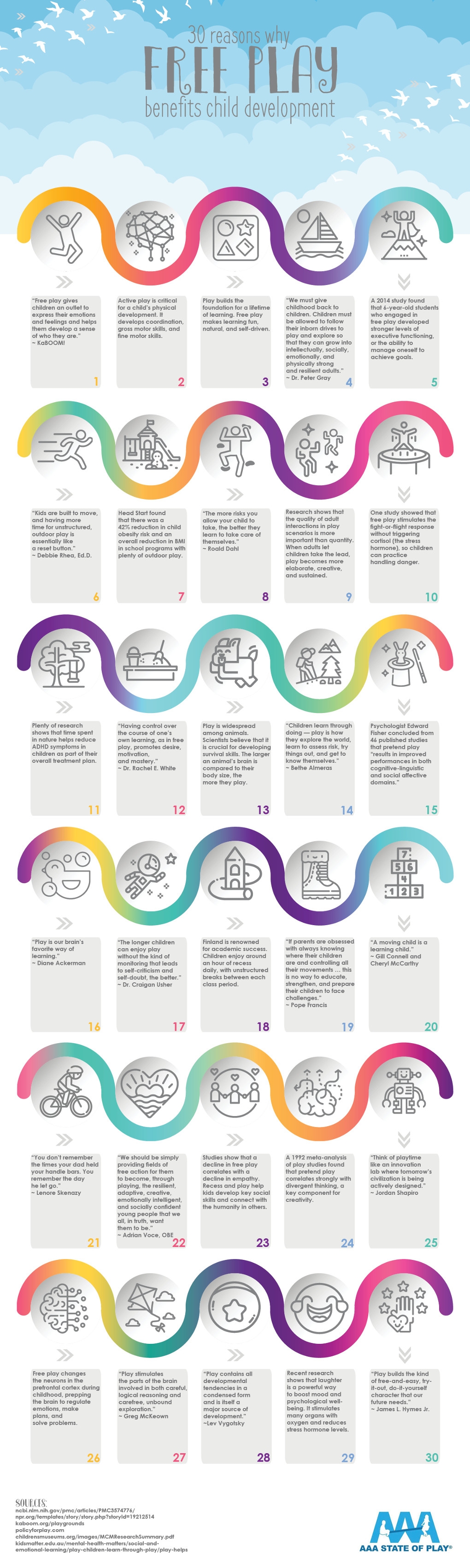
She asked if I would be able to, can't even think of the word, but elucidate will do, my Why for Play Based Learning.
She helped me realise that I have read a lot and have lots of ideas floating but I haven't tried to pull them all together in a clear, logical fashion.
I do know that I am more in agreement with the idea of child directed free play than more teacher directed set ups and provocations. I am also trying to work out how we can be more involved with outside play and nature.
Next steps:
Sit down with my readings and brain storm my Why?
Brain storm more Hows.
Attend Nathan Mikaere- Wallace's next talk in Nelson- April 10?
Current sources are:
Longworth Education
Tara O'Neill and Learning through Play face book page
Leslee Allen and Number Agents face book page
Nathan Mikaere -Wallis, Brain Wave Trust
Standard 4 - Learning Focused Culture
- Discussing my practice with colleagues and being open to new ideas.
- Promotion of positive and appropriate relationships with and between ākonga.
8 February 2019
Steve - TBCS - 8 Feb 2019 - Kapa Haka
The NZC Online newsletter February 2019 reported on
Whare Isaac Sharland, CORE Education facilitator, explains how Kapa Haka can help students develop a positive cultural identity resulting in increased confidence, engagement, and achievement.
It was nice to read the blog http://nzcurriculum.tki.org.nz/Curriculum-resources/NZC-Online-blog/Kapa-haka
We had in the past continued with the use of Kapa Haka to inform students about Te Reo through the translations of waiata and games to enhance their spoken language.
Next Steps: share this information with staff. Read the
Future focus – Ideas for teacher practice and I look forward to your feedback.
07/02/19

Ko Tāwhiuau rāua ko Hikurangi ōku maunga.
Kō Waiawa rāua ko Rangitaiki ōku awa.
Ko Ngati Whare rāua ko Ngāti Ruapani ōku hapū.
He uri ahau ō Ngāti Kahungunu ki Te Wairoa, rāua ko Ngāti Manawa ki Murupara.
Ngā tukemata ō Kahungungu, ko Tangiharuru te tangata, ko Apa-Hāpai-Take-Take te whare.
Ko Whare Isaac-Sharland tōku ingoa.
Tēnā koutou katoa.
Project origins
In 2016 I was astonished to hear a parent suggest that kapa haka provides no real potential for our tamariki, and disappointed that this viewpoint was supported by other teaching staff within our Te Aho Matua kura.
When I was growing up kapa haka was my salvation. I’m not sure if I would have survived mainstream secondary school if I didn’t have kapa haka to enjoy three times each week. Kapa haka allowed me to reconnect with my tūpuna and see myself in the learning – the practices were sacred to me.
Through kapa haka I gained confidence, I grew hungry for further knowledge about my culture, I found the place where I belonged after feeling alienated from my learning environment for so long. These experiences increased my confidence, contributed towards a positive identity of myself, reconnected me to kaupapa tuku iho such as whakapapa, whānau, te reo Māori me ōna tikanga. In short, kapa haka helped me further value my taha Māori.
However, a void seems to exist where some Māori parents, teachers, and whānau cannot align the benefits of kapa haka with positive student learning. A clear path of understanding needs to be created, in order that the positive transformational learnings of kapa haka can be realised by ākonga, whānau, and kaiako.
There is very little research around the impact of kapa haka on learning, language, culture, and identity. From personal experience and practice, I have an intuitive hunch that kapa haka provides invaluable insights because it is based on the validation of the diverse and rich fabric inherent within Māori systems of knowledge. My experiences in the world of kapa haka provided me with a line of inquiry, and ensured the lens throughout my 2017 research project remained kaupapa Māori focused.
Ngā mahi o te rēhia – Understanding kapa haka
Kapa haka is much more than a 20 minute competitive bracket. It is a catalyst for change that has a fundamental link to, and is a powerful medium of Māori identity, culture, and pride.
Kapa haka plays a large role in the revitalisation of the Māori language and Māori cultural values. It enhances positive well-being by encouraging a sense of belonging, providing a "safe haven" in which to practice te reo me ōna tikanga, whilst reinforcing social collaboration and cohesion. These understandings are capitalised upon within this research.
My research methodologies
Kaupapa Māori methodology (Smith, 1997) was my underlying research approach, and is deeply embedded throughout the project’s infrastructure. Although kaupapa Māori theory continues to evolve, it is often considered to be a theory that:
- literally envelopes “a Māori way"
- connects to Māori philosophy and principles
- validates and legitimises Māori systems of knowledge
- values the importance of Māori language and culture
- assumes Tino rangatiratanga over our own cultural well-being.
This project acknowledges and values Māori ways of knowing such as the absolute entrenchment of te reo Māori me ōna tikanga, and aims to create positive results that progress Māori aspirations (Pihama et al., 2004). An insider researcher (Walter, 2010) approach was also applied.
The notion of student voice was also part of my methodology, encompassing the traditional Māori values of “talking story” as a wayfinding mechanism. There were no limitations to how students could express their ideas and beliefs, which gave students the opportunity to create a meaningful project for themselves as well. This was achieved by encouraging students to help me understand what Kapa Haka means to them, alongside hui to assist students in identifying and explaining the myriad of feelings they were experiencing.
Two guiding questions were identified and were the basis for my project findings:
Project findings
My inquiry found that kapa haka does have the potential to positively influence student learning. This occurs in the way kapa haka makes students feel; more specifically, the positive feelings that students experience when doing or watching kapa haka. This understanding could lead to improved teacher practices.
Students are at the heart of this project. Their voices and experiences were integral within this study. My findings could influence decisions that are made about teaching and learning programmes for Māori and non-Māori students alike. There is much potential to transform classroom practices by utilising the legitimacy and validity of kapa haka as a solid culturally preferred practice that enhances student learning and positively influences student outcomes.
Furthermore, the impact on teacher practices could potentially contribute a structured student learning programme that elevates kapa haka as a mana enhancing approach to teaching and learning, reinforcing positive student outcomes.
Kapa haka is an act of disruption and reclamation

As an educated adult, I advocate the notions of disruption and reclamation. I choose to disrupt non-Māori cultural and educational norms by advocating for kapa haka as a powerful teaching and learning approach. I do this by normalising Māori language and kapa haka within Māori and non-Māori worlds. For me, this is an act of reclamation of tāonga tuku iho Māori, which validates our traditions, knowledge, and ways of being, ensuring they are not lost to us.
The misunderstanding demonstrated by various individuals, whānau, and educators alike that kapa haka has no worth, has no value, and therefore can make no real contribution to learning programmes leaves me apprehensive for the future of our tamariki. This belief, by implication, deems Māori culture as unworthy and without value within our schooling system.
Many of our students continue to be marginalised by our mainstream learning environments. It is these akonga that have so much more to lose if actions are not taken now. I suggest the pedagogy and content of kapa haka can act as a positive intervention in these settings.
Future focus – Ideas for teacher practice
This project is merely a beginning point. Despite being small-scale, from a culturally responsive perspective it propels school, kura, kaiako, and whānau to look seriously at the academic and social merits of kapa haka and its significance in nourishing whakapapa, language, culture, and identity.
This is not my story alone. This is the story of my students as well. They revealed all the same reasons that I needed kapa haka as a young Māori teenager finding my way 30 years ago. The lens on kapa haka needs adjusting to better reflect the true nature of kapa haka and their voices clearly support this.
There is potential for a more comprehensive examination of how kapa haka could positively assist with Māori student learning in both Māori and English mediums.
I invite kaiako to take up a challenge: Think about performing groups in your kura or other local kura. Look at the richness each group performance brings, and how a whole curriculum can emerge from a 20-minute performance. If you can understand what kapa haka does or what it could do, and build this across school curriculum, how might you use this knowledge as an enabler to transform your teaching practices?
30 January 2019
TBCS - First Week Back - Judy-Anne
As usual I feel behind even having only been at school for a couple of days.
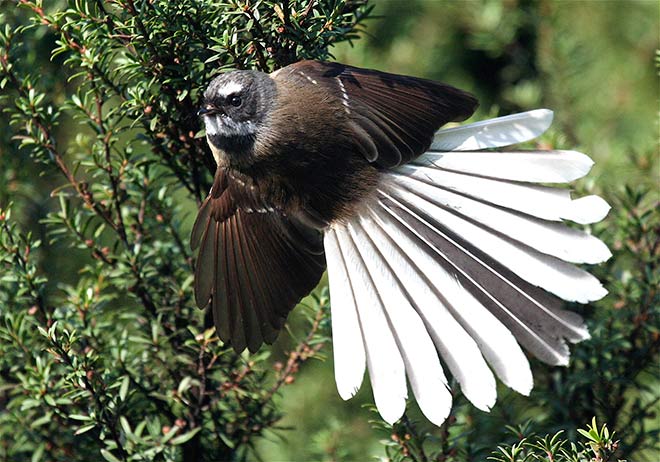
I need to remember to take things slow, to develop the routines and our class culture. We have developed our class rules and vote on choices as often as we can. We have had our school tour to let our new person know where things are and let everyone see where new things are ( the water fountain) and remeind them of the school boundaries.
It was great yesterday to have a fantail fly into the class, and stay for most of the morning. A great chance for Violet to help me with the Maori name- piwakawaka- I knew it was a long name for a little bird but couldn't quite remember it. I looked it up to check and found some images and facts as well. William was able to tell the others what 'insectivorous' meant. Interesting what some of them know- William finds it hard to move sensibly quite often but knows lots about science and nature.. L
It has been good having them colouring in their name banners and their waka. Lots of conversations happening so they are getting to know each other better and I am learning about them too.
Mel took Wilbur out for his COPS test and that went well. They are about half way through with no red flags. Reading his info last night there are possible signs of dyslexia / dyspraxia. I did notice a difficulty with understanding something he said yesterday and he has had some help from the speech therapist.
Next steps:
. Slow down- conversations and relationships are important
. Find out strengths and interests
- Promotion of positive and appropriate relationships with and between ākonga.
- Engaging ākonga in the establishment of routines and the creation of a positive learning environment.
21 December 2018
TBCS - Praise Rules from Richard James Rogers - Judy-Anne
https://richardjamesrogers.com/2018/07/15/the-four-rules-of-praise/
Sincere, specific, recorded, reinforced

Next steps
Start a journal for each child- birthdays, interests, achievements...
Share achievements with other staff so that others can praise children too
Standard 2
Professional Reading
Sincere, specific, recorded, reinforced
Next steps
Start a journal for each child- birthdays, interests, achievements...
Share achievements with other staff so that others can praise children too
Standard 2
Professional Reading
TBCS - Techniques Every teacher Needs from Richard James Rogers- Judy-Anne
https://richardjamesrogers.com/2018/09/09/10-techniques-every-teacher-needs-to-know/

Next steps
Develop- and use- a teacher journal, for successes as well as failures!
Next steps
Develop- and use- a teacher journal, for successes as well as failures!
TBCS - The Prayer of Jabez - Judy-Anne

“Sign up to be a gimper for God.”
A gimper always does a little more than is required or expected.
(Which fits in beautifully with our recent sermon series where we have been talking about God doing more than we could ever ask or imagine.)
Ch 2
So Why Not Ask
Is it possible God wants us to be more “selfish” in our prayers - ie actually ask for blessings for ourselves?
To bless in the biblical sense means to ask for or impart supernatural favour.
We need to want for ourselves nothing more and nothing less than God wants for us.
God’s nature is to bless. We need to ask.
Ch 3
Living Large for God
...please expand my opportunities and my impact in such a way that I touch more lives for Your glory. Let me do more for you.
Leads to ‘Jabez appointments.’
To pray for larger borders is to ask for a miracle. (When you take little steps you don't need God. )
Ch 4
The Touch of Greatness
When it feels too much for you - that's dependence- and what God wants from us!
...for the Christian, dependence is just another word for power.
Ch 5
Keeping the Legacy Safe
We should pray for God to keep us away from temptation.
Sometimes we will need to stand confidently against the enemy with what Paul calls "the weapons of our warfare." (2 Corinthians 10:4)
Ch 6
Welcome to God's Honour Roll
God favors those who ask.
We need to remember we have an extraordinary, miraculous God and step out in faith to follow Him.
Ch 7
Making Jabez Mine
Pray the Jabez prayer daily, mark it on your calendar.
Put the prayer up where you can see it. regularly.
Keep a record of the changes in your life especially the divine appointments and new opportunities you can relate directly to the Jabez prayer.
When you act you will step up to God's best for you.
Next steps:
Print off the prayer and display it
Make a journal for keeping the record in
Pray the Jabez prayer daily
Standard 2: Professional Reading
12 December 2018
:max_bytes(150000):strip_icc()/2764587-article-types-of-play-5aa68d5a875db90037fc1198.png)
10 December 2018
TBCS - Craig - PLD - The 4 Language Arts

The 4 Language Arts
Listening - Speaking - Reading - Writing
Listening.
There is a difference between Hearing and Listening.
Listening is a Focus.
Ways to develop listening skills:
Listen to great music - It is the bridge between vibration and Language
- Take daily time - find a great piece of music and just listen to it.
- Don't be afraid to listen to the same piece of music over and over.
- e.g. Benjamin Britain's Young Person's Guide to the Orchestra.
- e.g. Peter and the Wolf
- e.g. The Classical kids - Mr. Bach Comes to Call
Read out loud above child's decoding level.
- Decoding is very dependant on hearing.
- You say words to yourself - if you can't hear, you don't know what the word is.
- Language must be in your head first before you can decode when you are young.
Take notes.
- Create opportunities to take notes while listening e.g. Church
Speaking skills
- Speaking is intentional.
- Recite poems or scripture.
- Memorize excerpts from famous speeches e.g. Fredric Douglas (U.S slave) - memorize and commit to heart.
- Write your own speech (speech and debate league)
- limited planning speech (say 2 mins to prepare)
- expository speeches on current events.
- dramatic speeches - it combines all language arts together.
- Tell back what has just happened - it increases powers of observation.
Reading Skills
- It's more a brain function than something that can be taught and learned on demand.
- Scandinavian countries don't push reading till about 9 yr.
- Audiobooks are great - what's the difference? you can read with your eyes or ears.
- A bigger font can help.
- When reading to your children, read above their level - it sets an example to move up.
Writing Skills
- To write, you need an idea from within or without you.
- Own experiences often aren't in words but in pictures and feelings, so can be harder to write from.
- To have an original idea would be very unusual - everything is already out there.
- The idea has to get into words - It's tough!
- You have to hear what you just said to yourself and remember it long enough to get it down on paper - from your spelling database.
- Copy work is valuable - That's how you learn to write.
2019, We are changing the bell times to increase the length of the first period. Within the extra time, I plan to add time to listen to great works of music. I plan to teach the recorder, get my students to memorize their memory verses, establish a system for my students to practice and test spelling words each week, and memorize some poems over the year. I will also keep up the reading of a class book aimed at a decoding level above my students.
- Professional Learning
- School Goal (Writing)
6 December 2018
Teaching writing genres that dont exist in real life

https://www.tes.com/news/writing-genres-dont-exist-real-life-so-why-teach-them?fbclid=IwAR1vMI4uBr4OhnKMd1ESynxnG70KK3J4HwEmE45L13yH6XjNUN8rlyQzlJs
Since returning to teaching one of the noticeable differences is the move away from teaching specific writing genres and being more focused on how to write well over a whole range of styles. I have seen this in action in Steve's class as we taught first how to write proper sentences (simple and complex) and used whatever was happening at the time - camp experience to recount, Pobble 365, Armistice Day reports, Seesaw posts etc for practicing these base skills for writing. I much prefer this way as it is more relevant to students as it is being done daily which increases their motivation to write instead of spending a term just doing newspaper reports for example and having all our writing having to fit into that style.
Writing for purpose and audience is now the main focus as when students write to a structured format it looses any sense of personality and enjoyment while reading. Most of what we read online follows no set structure though striking a balance in there somewhere where writing is correct(spellchecked/edited) without loosing that creativity.
Next steps: It came out in the asstle writing test that students next steps are expanding on their ideas including complex ideas related to the wider world beyond themselves and writing for an audience. Many seem to assume the reader knows what they are talking about already so miss half the details. Next year we are signed up for the Get NZ Writing where students will write postcards to another school which will be ideal to work on explaining things to others from scratch.
Link to Standard - Teaching
Provide opportunities and support for learners to engage with, practice and apply learning to different contexts and make connections with prior learning.
Strategies
- Monitoring of ākonga learning during the implementation of a programme of learning, so that the programme can be adapted where needed to better achieve desired outcomes for ākonga.
- Using feedback from classroom observations to improve learning programmes.
- Observing other teachers’ use of resources and teaching strategies
5 December 2018
TBCS - Genres - Judy-Anne
https://www.tes.com/news/writing-genres-dont-exist-real-life-so-why-teach-them?fbclid=IwAR1vMI4uBr4OhnKMd1ESynxnG70KK3J4HwEmE45L13yH6XjNUN8rlyQzlJs
This is what you were looking for Margaret.

Subscribe to:
Posts (Atom)