14 May 2019

Life Education May 2019 Margaret

https://www.lifeeducation.org.nz/in-schools/ourprogramme
The school had Ingrid in last week.  It was good being able to join them this year for consecutive sessions which makes it easier to follow up on.  Some great learning about how our brain works especially as students go through puberty and getting support from a responsible adult.  She did this a very humorous enjoyable way.  One area that we have already followed up on is when students had to say a compliment to another. Many struggled with this either due to being self conscience or just couldn't think of nice things to say - I don't know, but we sent the rest of the day discussing what are compliments you can give to others beyond "you are nice" "you have nice hair".  Room 4 wrote secret letters to another person which they responded to positively though some still struggled.  We were able to tie it into our devotions and giving our writing a real life purpose. 

Next steps:
Follow up with he Life Ed books and have a look at the website.  Tie this into our devotions - responsibility.  Writing compliment letters could be something regular (once a month) or having students show extra kindness to one students as a way of thinking of others.

Link to standard


  • Establishing positive and appropriate relationships with and between ākonga.

Improving Long Term Memory, Margaret 2019


Reflection:
One student in particular in Room 4 seems to struggle getting things into his long term memory though many also seem to struggle to follow instructions so I did a little research to see what I could do differently.  Mostly I found strategies that I have been using but sometimes tend to forget when time is limited or you are trying to do spontaneous activites which have not been pre prepared.  In particular this is for maths which has a focus on getting things into students long term memory by repetition and mastery of concepts instead of answering a few questions right then moving on.  This however does not seem to be working for David.  One of the suggestions is have students write out their steps as they can see their method in another form and the act of writing it down helps to consolidate. 

Next Steps:
As MathsBuddy is all online David may need encouraging to write his answers and working out instead of doing it in his head even if he can.  Check to see if this along with some of the other strategies suggested make any difference when it comes time to take diagnostic test.  Possibly find another way to check his understadning rather than diagnostics as he seems to also have a mental block about these.  Paper test, oral test?? Test at all??


1. Give directions in multiple formats

Students benefit from being given directions in both visual and verbal formats. In addition, their understanding and memorizing of instructions could be checked by encouraging them to repeat the directions given and explain the meaning of these directions. Examples of what needs to be done are also often helpful for enhancing memory of directions.

2. Teach students to over-learn material

Students should be taught the necessity of "over-learning" new information. Often they practice only until they are able to perform one error-free repetition of the material. However, several error-free repetitions are needed to solidify the information.

3. Teach students to use visual images and other memory strategies

Another memory strategy that makes use of a cue is one called word substitution. The substitute word system can be used for information that is hard to visualize, for example, for the word occipital or parietal. These words can be converted into words that sound familiar that can be visualized. The word occipital can be converted to exhibit hall (because it sounds like exhibit hall). The student can then make a visual image of walking into an art museum and seeing a big painting of a brain with big bulging eyes (occipital is the region of the brain that controls vision). With this system, the vocabulary word the student is trying to remember actually becomes the cue for the visual image that then cues the definition of the word.

4. Give teacher-prepared handouts prior to class lectures

Class lectures and series of oral directions should be reinforced by teacher-prepared handouts. The handouts for class lectures could consist of a brief outline or a partially completed graphic organizer that the student would complete during the lecture. Having this information both enables students to identify the salient information that is given during the lectures and to correctly organize the information in their notes. Both of these activities enhance memory of the information as well. The use of Post-Its to jot information down on is helpful for remembering directions.

5. Teach students to be active readers

To enhance short-term memory registration and/or working memory when reading, students should underline, highlight, or jot key words down in the margin when reading chapters. They can then go back and read what is underlined, highlighted, or written in the margins. To consolidate this information in long-term memory, they can make outlines or use graphic organizers. Research has shown that the use of graphic organizers increases academic achievement for all students.

6. Write down steps in math problems

Students who have a weakness in working memory should not rely on mental computations when solving math problems. For example, if they are performing long division problems, they should write down every step including carrying numbers. When solving word problems, they should always have a scratch piece of paper handy and write down the steps in their calculations. This will help prevent them from losing their place and forgetting what they are doing.

7. Provide retrieval practice for students

Research has shown that long-term memory is enhanced when students engage in retrieval practice. Taking a test is a retrieval practice, i.e., the act of recalling information that has been studied from long-term memory. Thus, it can be very helpful for students to take practice tests. When teachers are reviewing information prior to tests and exams, they could ask the students questions or have the students make up questions for everyone to answer rather than just retelling students the to-be-learned information. Also, if students are required or encouraged to make up their own tests and take them, it will give their parents and/or teachers information about whether they know the most important information or are instead focused on details that are less important.

8. Help students develop cues when storing information

According to the memory research, information is easier retrieved when it is stored using a cue and that cue should be present at the time the information is being retrieved. For example, the acronym HOMES can be used to represent the names of the Great Lakes — Huron, Ontario, Michigan, Erie and Superior. The acronym is a cue that is used when the information is being learned, and recalling the cue when taking a test will help the student recall the information.

9. Prime the memory prior to teaching/learning

Cues that prepare students for the task to be presented are helpful. This is often referred to as priming the memory. For instance, when a reading comprehension task is given, students will get an idea of what is expected by discussing the vocabulary and the overall topic beforehand. This will allow them to focus on the salient information and engage in more effective depth of processing. Advance organizers also serve this purpose. For older students, Clif Notes for pieces of literature are often helpful aids for priming the memory.

10. Review material before going to sleep

It should be helpful for students to review material right before going to sleep at night. Research has shown that information studied this way is better remembered. Any other task that is performed after reviewing and prior to sleeping (such as getting a snack, brushing teeth, listening to music) interferes with consolidation of information in memory.

From
http://www.readingrockets.org/article/10-strategies-enhance-students-memory


Link to Teaching Standard


-  Develop learning focused relationships with learners, enabling them to be active participants in the process of learning, sharing ownership and responsibility for learning.

Questions I might ask myself
  • Do I understand effective pedagogy as described in the NZC?
  • What are ways that I can successfully engage ākonga?
  • Strategies
  •  Discussing my practice with colleagues and being open to new ideas.
  • Understanding and using a range of innovative, co-operative and inquiry learning approaches.

10 May 2019

TBCS - Maths Buddy - Judy-Anne

I’m not quite sure what made me think of it but I have been thinking of ways to use more technology in the class again. Craig is often talking about how well his children are progressing on Maths Buddy and I finally realised that we didn’t need to have licenses for everybody in the class!
We have started using year groups, watching the videos and answering the questions together. They have generally been pleased about how easy they were finding the questions. Rounding to the nearest hundred was tricky for the year 3’s though.

Reflection:
One of the advantages is that the videos are playing out loud so everybody can hear every lesson, they can choose to join different lessons if they like and I can also require children to watch a different level video, particularly if they found their level difficult. Some of them will be able to move up to the next level quickly.


Next Steps:
. Set some extra practice for rounding to the nearest hundred for the year 3’s, except luca who was very confident.

Standard 6 Teaching

Use an increasing repertoire of teaching strategies, approaches, learning activities, technologies and assessment for learning strategies and modify these in response to the needs of individuals and groups of learners.

Teach in ways which enable learners to learn from one another, to collaborate, to self-regulate, and to develop agency over their learning.

  • Monitoring of ākonga learning during the implementation of a programme of learning, so that the programme can be adapted where needed to better achieve desired outcomes for ākonga.

8 May 2019

TBCS - Helping Each Other Out - Judy-Anne


One of the girls from Room 4 was looking particularly unhappy yesterday so I suggested to Steve she might need some Room 1 time. (Knowing that there has been a big change in their home life lately and Mum is currently sick)
She came down soon after cross country training and stayed on the sidelines a little. Then she was quite happy to come over and make her own Mothers Day card. She went out to break quite happily, stayed with her class during the next session for her times tables work and writing then joined us again after lunch. She did a lovely job of supporting the Room 1 children with their playing and chatted nicely about who she could talk to about what is currently upsetting her. She has already spoken to an outside provider and decided she is quite happy to talk with Steve. Hopefully they have done that today when Steve had some time available.

This is quite a long winded way of saying that we all tend to have an idea of when things are going a bit pear shaped for our students, even when they are not students in our class. No-one ever needs to feel that they have to deal with difficulties by themselves.

Hopefully this increases her well being because she knows more people are there for her but also increases our well being as we know we have others there to support us too.


Standard 4- Learning-focused culture
Manage the learning setting to ensure access to learning for all and to maximise learners’ physical, social, cultural and emotional safety.
  • Fostering tuakana/tēina relationships.

6 May 2019

TBCS - Lessons from Life Education - Judy-Anne


It is always lovely having Ingrid visiting. While I sometimes think she has a fabulous job I am not sure I would like (or cope well with) having a number of  different classes and levels in a day and even potentially a number of schools in a week. She also gets to be observed for every lesson - ugh. Plus she gets to play second fiddle to a puppet!
Life Education has lots of resources to share so there always plenty of options for follow up work.
Ingrid uses lots of many positive teaching methods. She makes the rules fun- eg put up your brain aerial if you want to speak, but also sets very firm boundaries. She gives clear directions and checks they are understood. Everybody gets a chance to shine. The children are engaged by the activities, the songs and of course they adore Harold. William in particular loved the science and knew which way up to put the snorkel.
The children enjoyed telling me how they had swum underwater with Harold on Friday and the room was all blue. There is some great technology in that truck!


Reflections:
Ingrid was very good about involving everyone, getting them up and moving and using songs. While I do all those things maybe I should keep a bit more of a record to ensure I am doing it regularly. Maybe I include some children more than others and we probably don't move and sing as regularly as they did with Ingrid. Maybe the question is 'how much movement and singing do they need?' If they are happy and on task are they getting enough?

Next steps:
. Get the puppets out
. Ensure we follow up on some of the learning from our sessions. Check with the children and also check back to Ingrid's lesson plan for Friday as I was away sick.
.Complete at least some of the work books at school
.Make thank you cards
. Art work about Harold swimming underwater
.Maybe write a story about Harold's visit to Kelly Tarlton's, and use of the snorkel to breather underwater
vocab list- respiration, oxygen, carbon dioxide, lungs, trachea, mouth and nose


3. Engage in reciprocal, collaborative learning-focused relationships with:
·         learners’, family and whānau
·         teaching colleagues, support staff and other professionals
·         agencies, groups and individuals in the community.
  • Appropriate and professional communication with colleagues, ākonga and whānau.

6. Use an increasing repertoire of teaching strategies, approaches, learning activities, technologies and assessment for learning strategies and modify these in response to the needs of individuals and groups of learners.

Provide opportunities and support for learners to engage with, practise and apply learning to different contexts and make connections with prior learning.

  • Observing other teachers’ use of resources and teaching strategies.

30 April 2019

Steve Writing Seesaw April 2019

1. Post
2. Teaching Standard
3. How this fits the teaching standard
4. Reflection
5. Next steps
6. Label with your name, the standards it covers, Appraisal

Writing

Select teaching approaches, resources and learning, based on a thorough knowledge of, learning.
  • Finding opportunities to develop and use a wide variety of different teaching strategies to effectively engage ākonga and enhance their learning.
  •  Using effective questioning techniques
  • Employing scaffolding strategies to support ākonga master new skills and knowledge and thus achieve independence


Link
SeeSaw: investigating seesaw as activities providers. I spent some time locating interesting and engaging resources. I trialed the first activity "What is the main idea and what are 3 supporting details from the text. The students then watched the video and answered 5 questions.
 This scaffolding led me to introduce the ALL programme. The students were taken out and introduced to the task coming up. 

October 2019. The number of posts has increased from 263 to 790. All families bar one are interacting with their child/s learning.


Things to be Thankful For! The next Seesaw activity is allowing for 
presentation of their findings, and the use of audio to suppliment it. Response so far is 
very good.

k

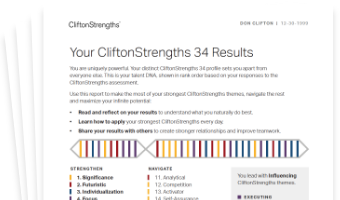
TBCS - Strength finders PLD - Judy-Anne


It was really interesting to retake the strengths finders quiz and discover that my top 5 are the same as the first time I did it, just in a different order. The last time I took the test I had a different one in my top 5, which is still in my top 10.
Rob showed us the learner section so there is heaps of stuff I can look at and learn more about. He has suggested that the best use we will get out of it is if we actually look at our results, talk about them and use the resources regularly. It's great to know that all of this info and support is available to use as previously we had done the quiz, read the results and pretty much left it there. It is also a reminder that the same is true of many things we do at school - if we don't look at things and discuss them regularly they are of very little use to us. (that is why appraisals have previously been a bit hopeless at each school I have worked at- they were only ever looked at and discussed when it was 'appraisal time.')

I have started some of the modules and looked at some of the resources online. We had some good discussion around the strengths of the teachers in the school and it has made it clear why some of us do things the way we do. A number of my top strengths talk about being solitary and I know I need time by myself and time to think: being with people is quite draining for me, I don't do small talk!

Reflection:
A statement that really resonated was that "Acquiring knowledge is as much a pastime for you as it is a necessity of life." That's a really strong statement!I would not have considered acquiring knowledge as being necessary but I guess for me it is! It also helps to explain my hoarding of info and resources (never know when you might need it!) and why it is easy for me to start things, but not necessarily finish them. For me it is the knowledge acquisition and the process rather than the end product which is important.

Next steps:
.Purge some resources, I have started on this but it is never an easy process for me and I tend to be adding more while getting rid of others. Definitely a work in progress on this one.
. Develop systems- sometimes having all these resources is pretty useless because I can't find what I want when I want it! I did sort some of the folders on the shared drive, but I'm not sure they stayed sorted. I went back later to find things back out of the folders. Steve thought maybe moving folders just moved a copy so I need to go back and check to see if that is true. Hopefully I was just looking at an old version of the drive. I may need to check this with Rob otherwise.
. look at the Gallup site regularly. There is some good advice on it for applying your strengths
. Discussion with other staff about our individual and collective strengths and how we can make our team even stronger
. Make links with this information and Relationship Based Learning


  • Ongoing active involvement in a school/community of schools or other professional learning communities (PLC).
  • Participation in professional development (PLD), both in school and through outside agencies. Working with colleagues to enact the new learning. 


Link

This

9 April 2019

Robs PLD In class 19 March Margaret

Rob came in last week for skill teaching with students and teachers.  In Room 4 he asked the class for ways they could present their writing.  He introduced them to google draw, making animation and stop/motion video.  The students had a play, developing those basic skills first while others who knew taught others and myself.  This was an opportunity for me also to learn these skills as I find it quite difficult to send students of to do this when I don't know it myself.

During the week students had the opportunity to carry on with this when they had finished their work, sharing with each other.

Follow up with Rob:  Online conference - mentioned where students are and shared some of their work.  As a staff we did some skill building on using google draw as students are miles ahead in this.
Next steps:  Find purposeful ways to use this in class (publishing stories from writing, science) brainstorm further ideas with Steve.  Checklist to use to ensure all students have the basic skills using google draw.  Show students site of drawing so they can see what can be achieved.

Joels Cars

 https://www.labnol.org/internet/google-drawings-art/28855/
Google Draw Art Site

Mihi Assessment: Margaret 9 April 2019

Appraisal Documentation

PLD - Steve - Local Curriculum Course April 2019

PLD - Steve - Local Curriculum Course April 2019


25 March 2019

TBCS- Appraisal Template - Judy-Anne


1. Post
2. Teaching Standard
3. How this fits the teaching standard
4. Reflection
5. Next steps
6. Label with your name, the standards it covers, Appraisal


20 March 2019

Margaret PCT Course 20 March 2019

Effective Classroom Management
Do:

Consistent Routines/orderly
Teaching of Devotions – Character Traits focus each term
Individual learning spaces plus tables in the middle if students wish to work together.
THINK Chart on the wall
Free time – choosing if work is completed
Engaging work – students have their own goals to work toward/self motivated/laptops

Modelling
explicit teaching
have expectations
build relationships

Be:
Approachable
Available
Culturally responsive/aware
A learner
 Be mindful of your influence

Know
Know the learners / where they are at
The subject
School systems
The school community
The Curriculum
IEPs
Page 31 of the Curriculum (Creating effective Pedagogy)

Standards for the Teaching Profession
Discussions on ways to link standards and recording evidence

To Get
Mentor Teacher Registration number

I and M
- Observations (minimum of 2-3 per year) with a focus each time - could be any teacher
Get Video from Vicky
Discussions on observation with mentor with my voice in there/Actions
Record meeting with teacher
Evidence of reflective practice 
PLD - LINK to classroom practice(see in planning)
Written feedback on  progress to meeting standards

Sharing with other teachers (resources)
 

Year 7/8 Gail Loan Writing
Flippity - teams, small groups
Maths Games
Dymock - maths
You cubed - maths
Maths Shed
Maths is Fun


Join code:  primary

Maori History
Primary Te Takanga o te Wa


Next steps/Reflections
Discussing the DOs, Be's, Know made me feel quite confident that I am meeting these already in the classroom in the way I am doing things.  Especially in the area of positive relationships.  Talking to other teachers on the course, I realise how lucky I am to be in a school that has such a focus on relationships and developing those character traits through our devotions and special character.  Many schools are told there is to absolutely no religious content at all or even have specific character focus lessons/starting the day with a karakia/prayer or even discussions around touchy subjects.  Recent events such as fires, graphic videos and Christchurch are discussed at home only so to be able to talk openly and pray as a class makes such a difference to the feel of the school.  To have such a focus on this to the point if students are not in the space to learn then we have the time to deal with individuals as needed.

Next steps also for me include being more consistent in recording evidence especially conversations with Judy-Anne and Steve.